Spray Dry Granulation in Fluid Bed Technology and Scale Up

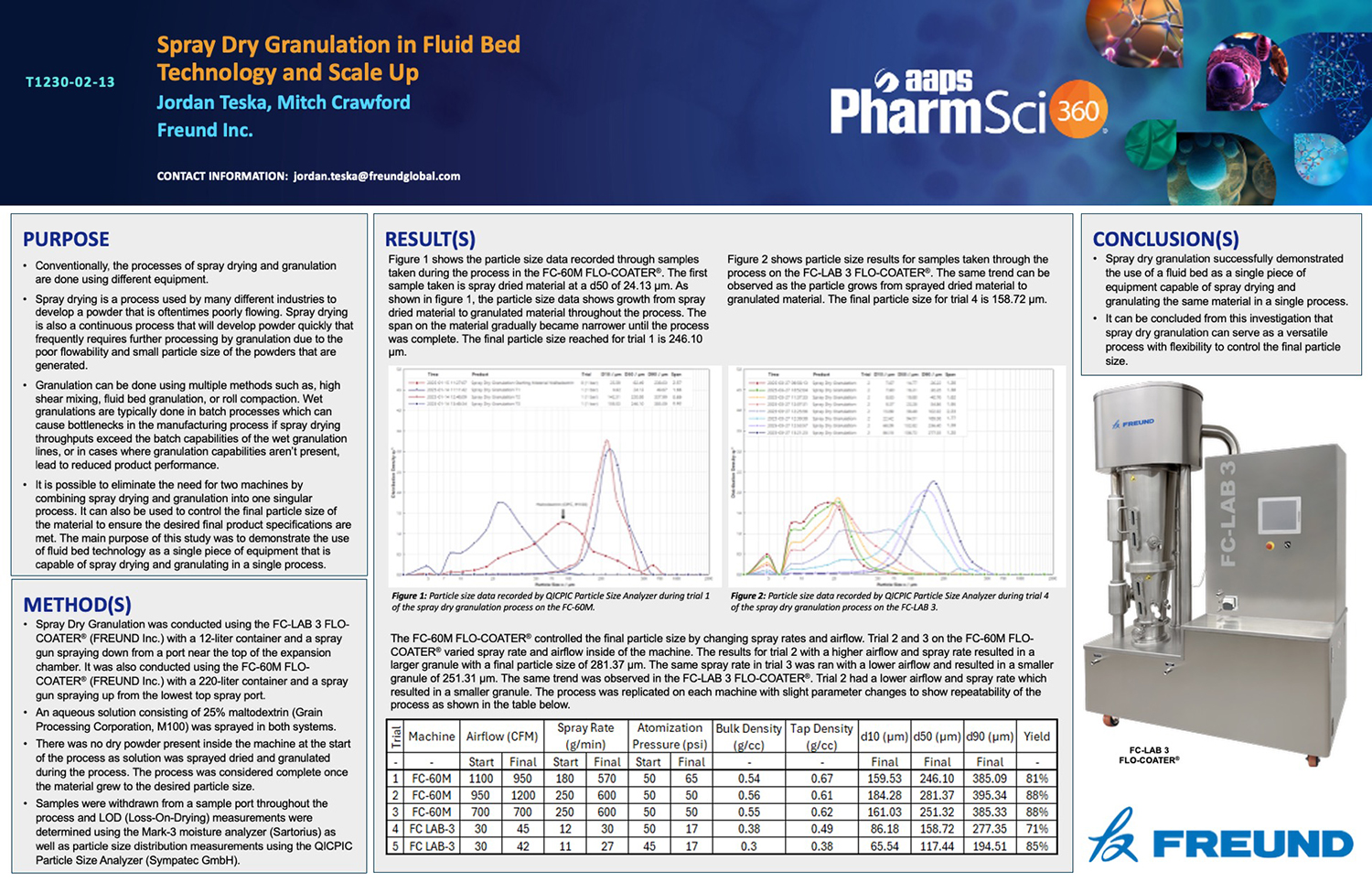
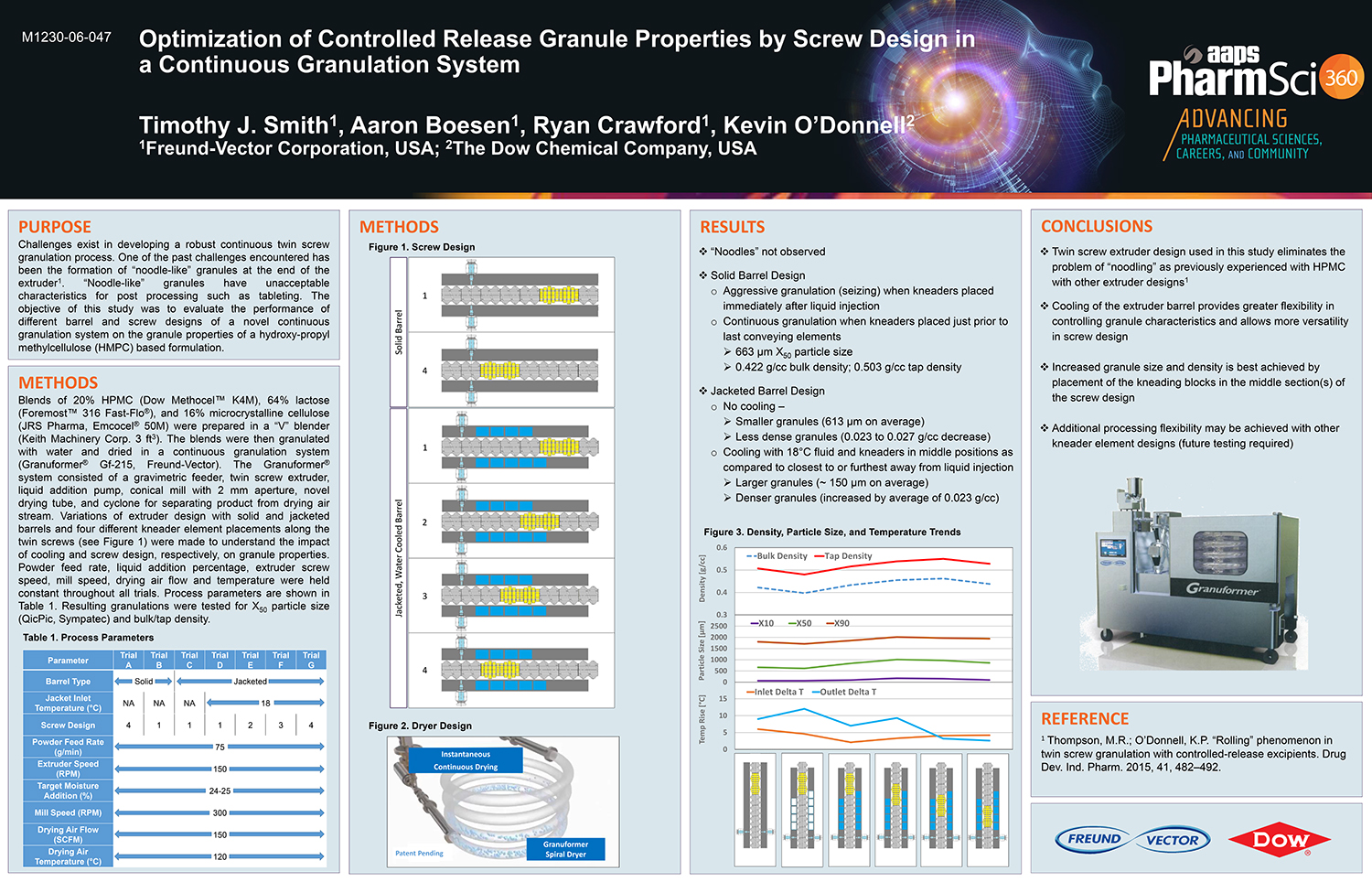
Granulation can be done using multiple methods such as, high shear mixing, fluid bed granulation, or roll compaction. Wet granulations are typically done in batch processes which can cause bottlenecks in the manufacturing process if spray drying throughputs exceed the batch capabilities of the wet granulation lines, or in cases where granulation capabilities aren’t present, lead to reduced product performance. It is possible to eliminate the need for two machines by combining spray drying and granulation into one singular process. It can also be used to control the final particle size of the material to ensure the desired final product specifications are met. The main purpose of this study was to demonstrate the use of fluid bed technology as a single piece of equipment that is capable of spray drying and granulating in a single process.

Continue

Producing ASDs with Pressure Nozzles Using Laboratory Scale Spray Dryers

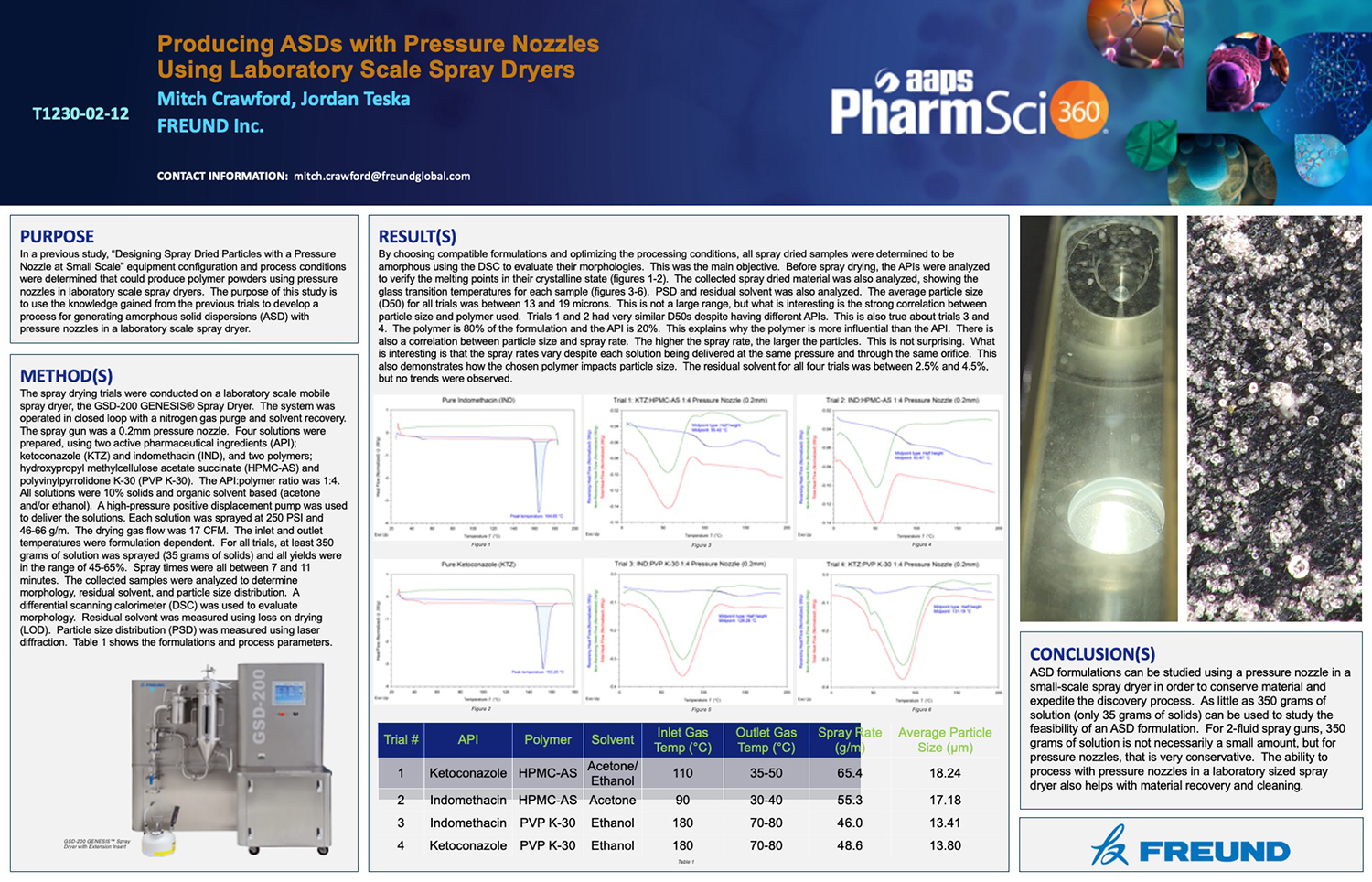
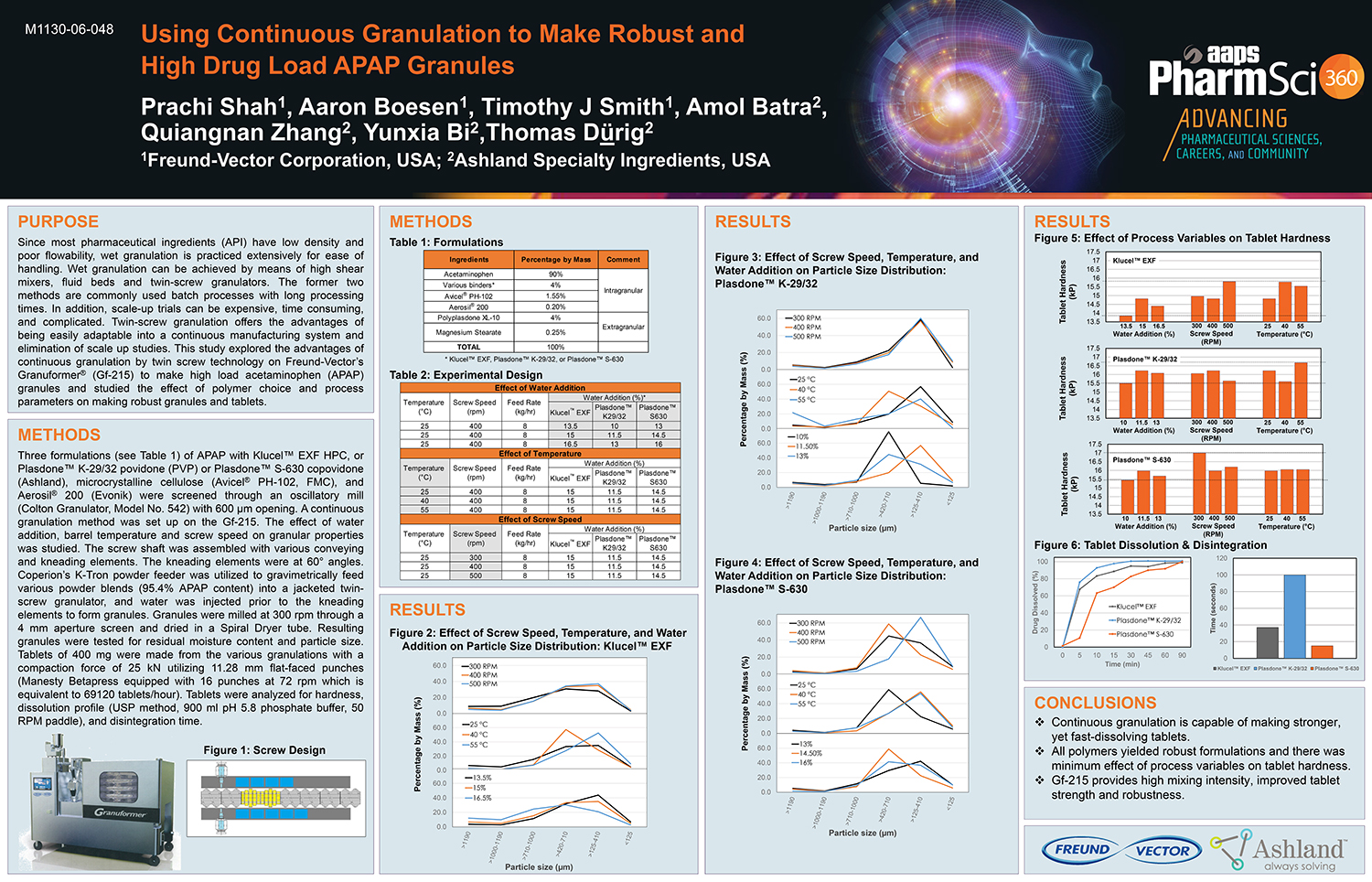
In a previous study, “Designing Spray Dried Particles with a Pressure Nozzle at Small Scale” equipment configuration and process conditions were determined that could produce polymer powders using pressure nozzles in laboratory scale spray dryers. The purpose of this study is to use the knowledge gained from the previous trials to develop a process for generating amorphous solid dispersions (ASD) with pressure nozzles in a laboratory scale spray dryer.

Continue

A Comparative Study Of Product Recovery In Laboratory Scale Spray Dryers: Standard Cyclone vs. The Discovery Module

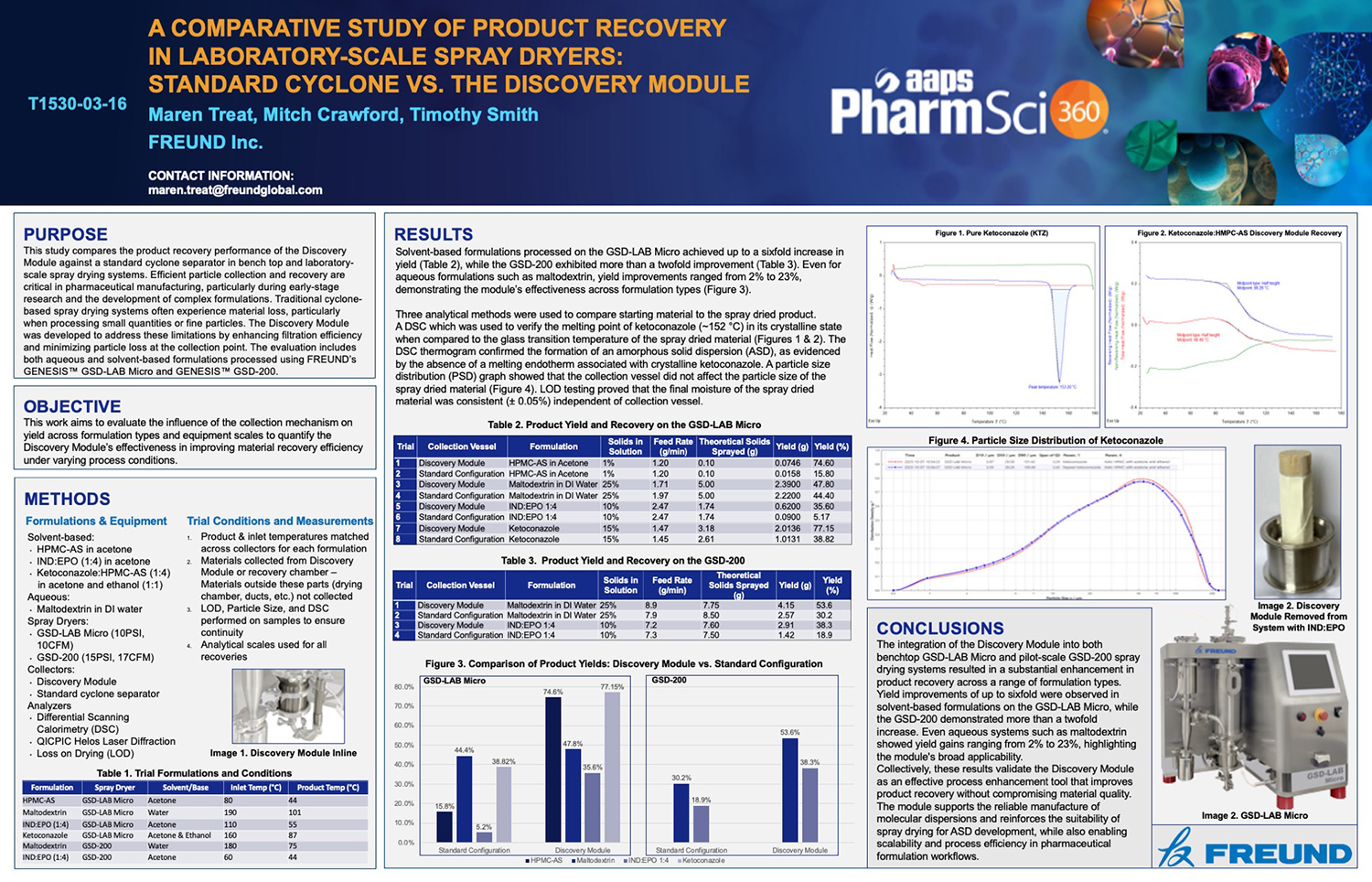
This study compares the product recovery performance of the Discovery Module against a standard cyclone separator in bench top and laboratory-scale spray drying systems. Efficient particle collection and recovery are critical in pharmaceutical manufacturing, particularly during early-stage research and the development of complex formulations. Traditional cyclone-based spray drying systems often experience material loss, particularly when processing small quantities or fine particles. The Discovery Module was developed to address these limitations by enhancing filtration efficiency and minimizing particle loss at the collection point. The evaluation includes both aqueous and solvent-based formulations processed using FREUND’s GENESIS™ GSD-LAB Micro and GENESIS™ GSD-200.
Continue

Pea starch as an environmentally sustainable solution in pharmaceutical film coating applications using the ReadiLYCOAT® system

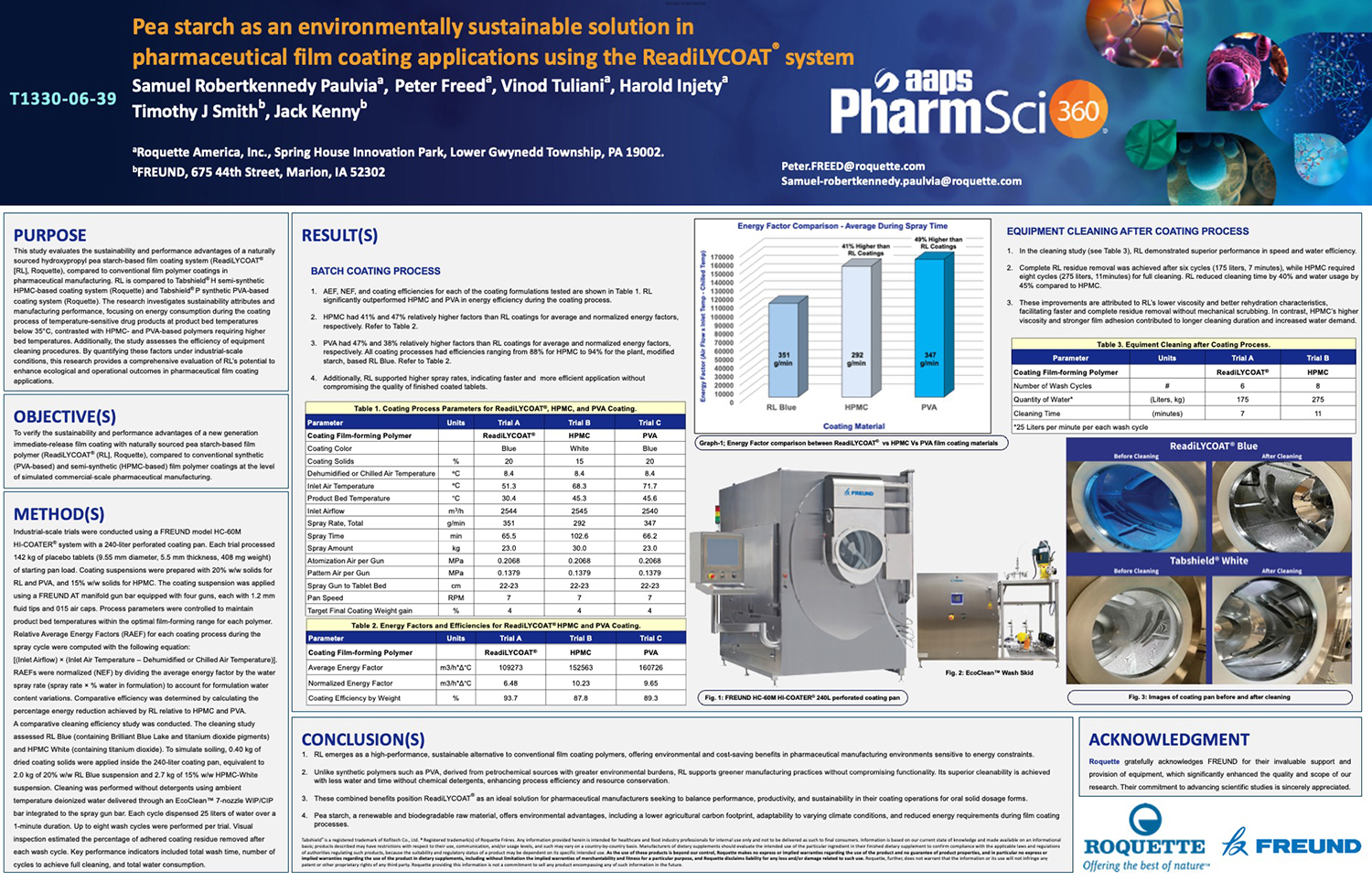
This study evaluates the sustainability and performance advantages of a naturally sourced hydroxypropyl pea starch-based film coating system (ReadiLYCOAT® [RL], Roquette), compared to conventional film polymer coatings in pharmaceutical manufacturing. RL is compared to Tabshield® H semi-synthetic HPMC-based coating system (Roquette) and Tabshield® P synthetic PVA-based coating system (Roquette). The research investigates sustainability attributes and manufacturing performance, focusing on energy consumption during the coating process of temperature-sensitive drug products at product bed temperatures below 35°C, contrasted with HPMC- and PVA-based polymers requiring higher bed temperatures. Additionally, the study assesses the efficiency of equipment cleaning procedures. By quantifying these factors under industrial-scale conditions, this research provides a comprehensive evaluation of RL’s potential to enhance ecological and operational outcomes in pharmaceutical film coating applications.
Continue

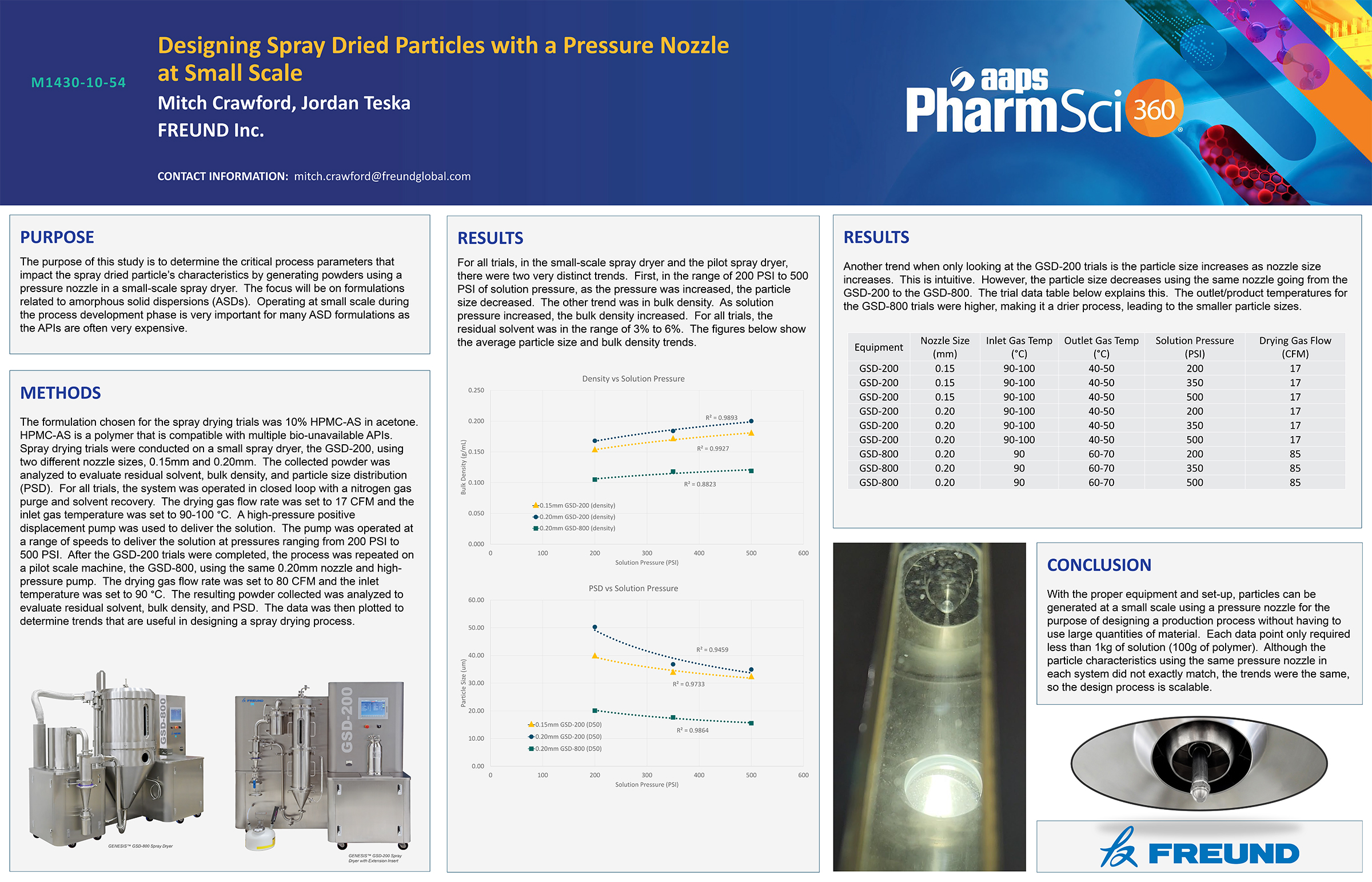
Designing Spray Dried Particles with a Pressure Nozzle at Small Scale

The purpose of this study is to determine the critical process parameters that impact the spray dried particle’s characteristics by generating powders using a pressure nozzle in a small-scale spray dryer. The focus will be on formulations related to amorphous solid dispersions (ASDs). Operating at small scale during the process development phase is very important for many ASD formulations as the APIs are often very expensive.

Continue

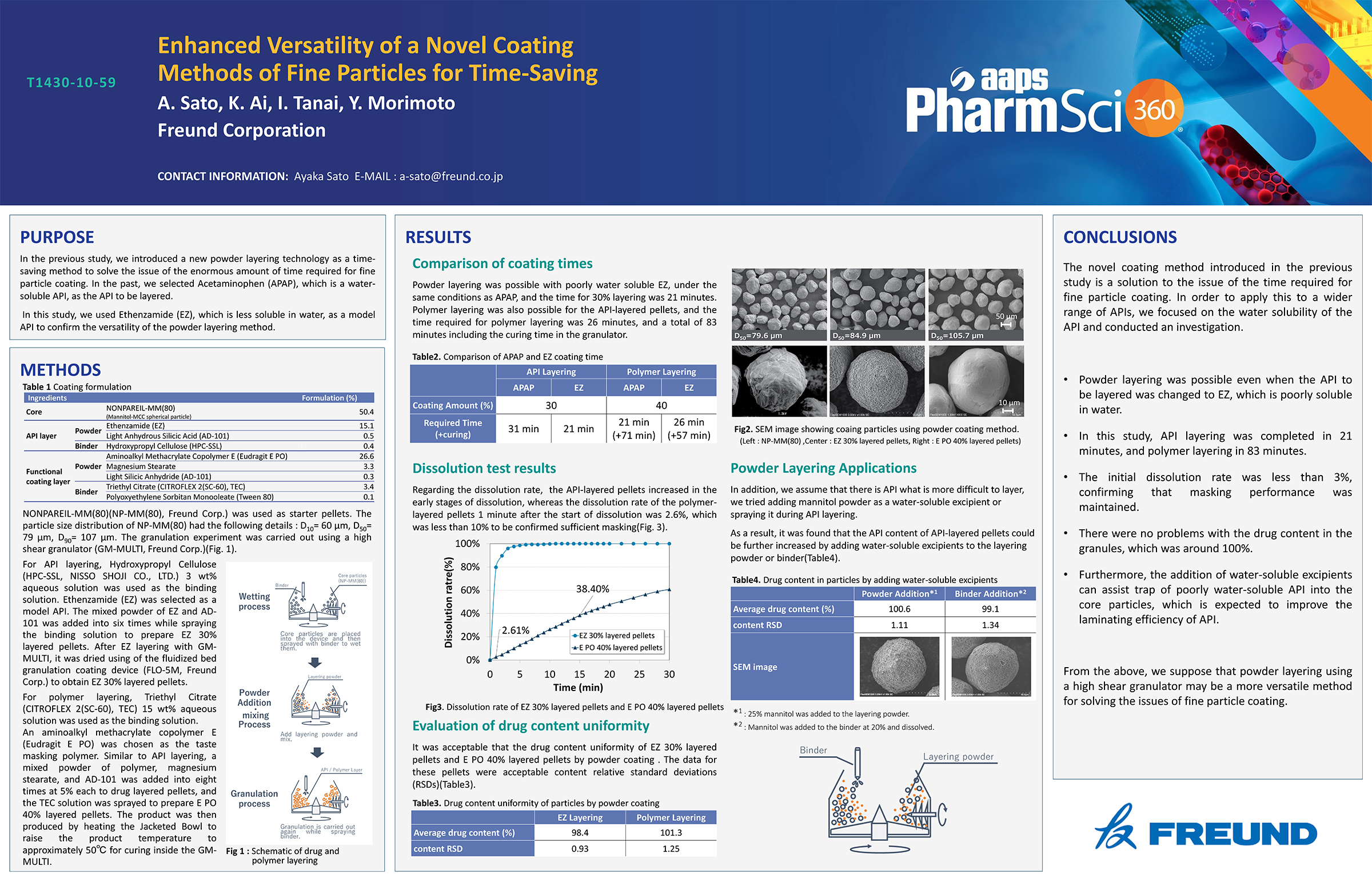
Enhanced Versatility of a Novel Coating Methods of Fine Particles for Time-Saving

In the previous study, we introduced a new powder layering technology as a timesaving method to solve the issue of the enormous amount of time required for fine particle coating. In the past, we selected Acetaminophen (APAP), which is a water soluble API, as the API to be layered.

In this study, we used Ethenzamide (EZ), which is less soluble in water, as a model API to confirm the versatility of the powder layering method.

Continue

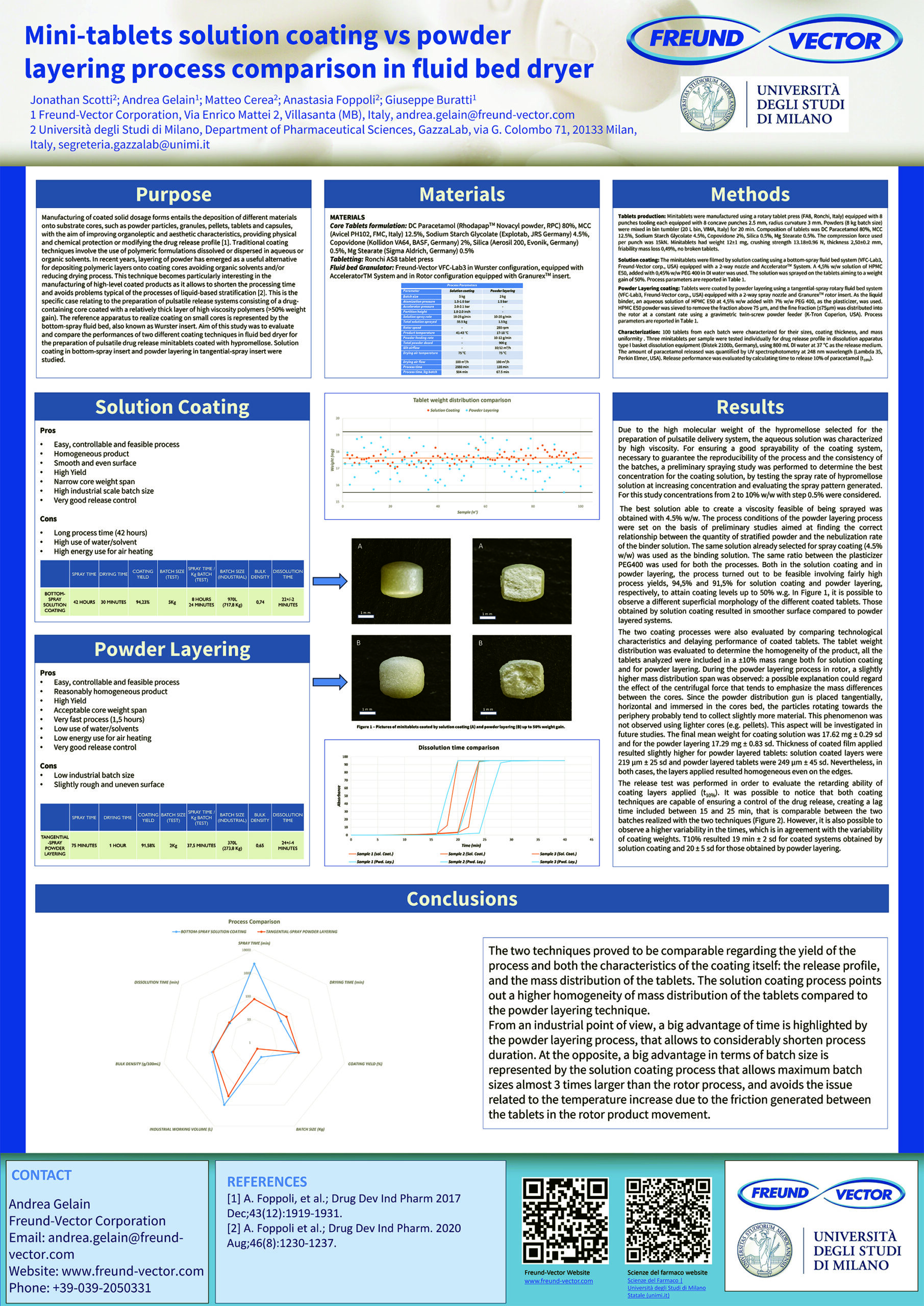
Solution Coating vs Powder Layering in Fluid Bed for Preparation of Hypromellose-Coated Minitablets per Stampa

Manufacturing of coated solid dosage forms entails the deposition of different materials onto substrate cores, such as powder particles, granules, pellets, tablets and capsules, with the aim of improving organoleptic and aesthetic characteristics, providing physical and chemical protection or modifying the drug release profile [1]. Traditional coating techniques involve the use of polymeric formulations dissolved or dispersed in aqueous or organic solvents. In recent years, layering of powder has emerged as a useful alternative for depositing polymeric layers onto coating cores avoiding organic solvents and/or reducing drying process. This technique becomes particularly interesting in the manufacturing of high-level coated products as it allows to shorten the processing time and avoids problems typical of the processes of liquid-based stratification [2]. This is the specific case relating to the preparation of pulsatile release systems consisting of a drug-containing core coated with a relatively thick layer of high viscosity polymers (>50% weight gain). The reference apparatus to realize coating on small cores is represented by the bottom-spray fluid bed, also known as Wurster insert. Aim of this study was to evaluate and compare the performances of two different coating techniques in fluid bed dryer for the preparation of pulsatile drug release minitablets coated with hypromellose. Solution coating in bottom-spray insert and powder layering in tangential-spray insert were studied.

Continue

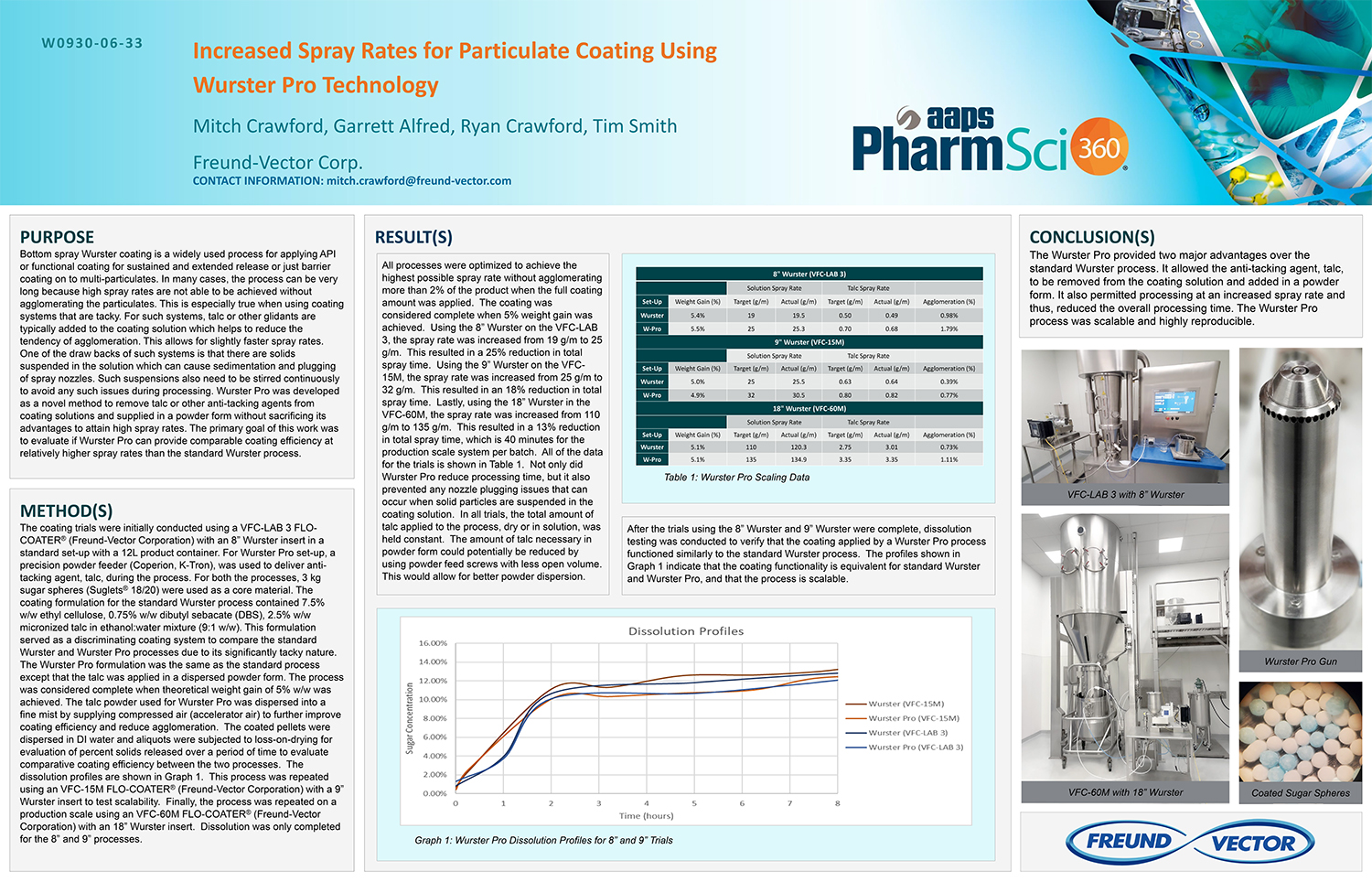
Increased Spray Rates for Particulate Coating Using Wurster Pro Technology

The Wurster Pro provided two major advantages over the standard Wurster process. It allowed the anti tacking agent, talc, to be removed from the coating solution and added in a powder form. It also permitted processing at an increased spray rate and thus, reduced the overall processing time. The Wurster Pro process was scalable and highly reproducible.

Continue

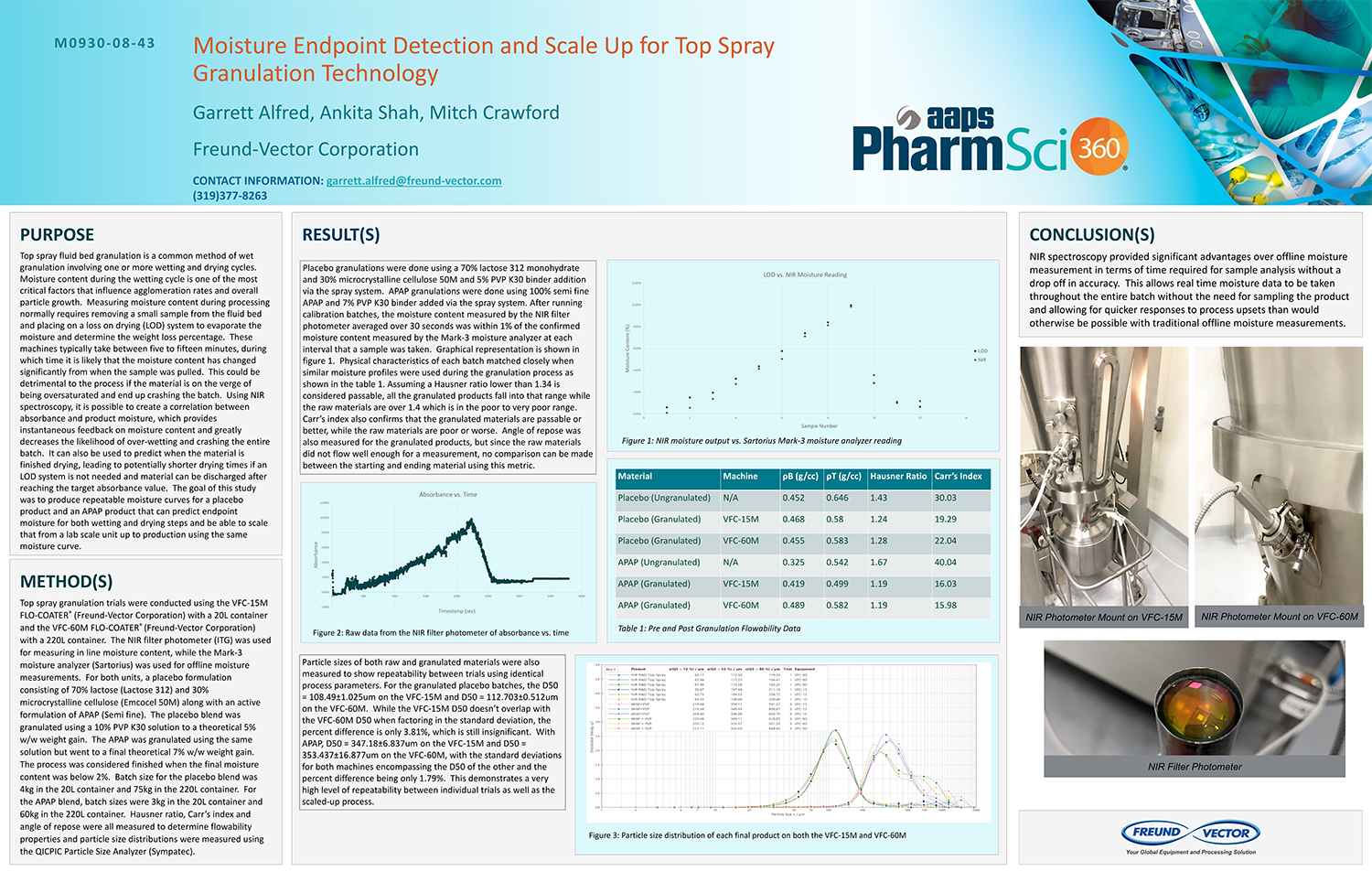
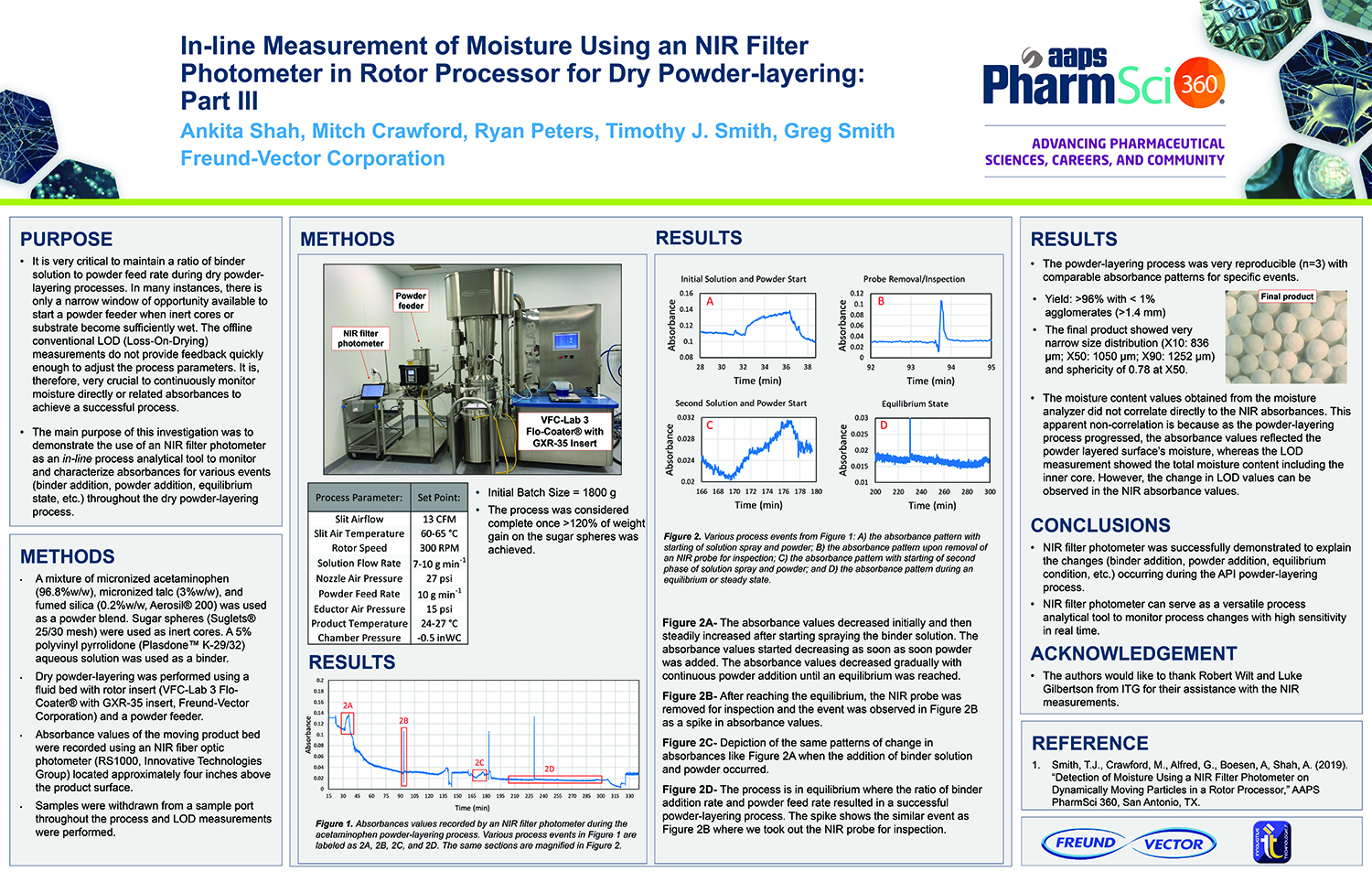
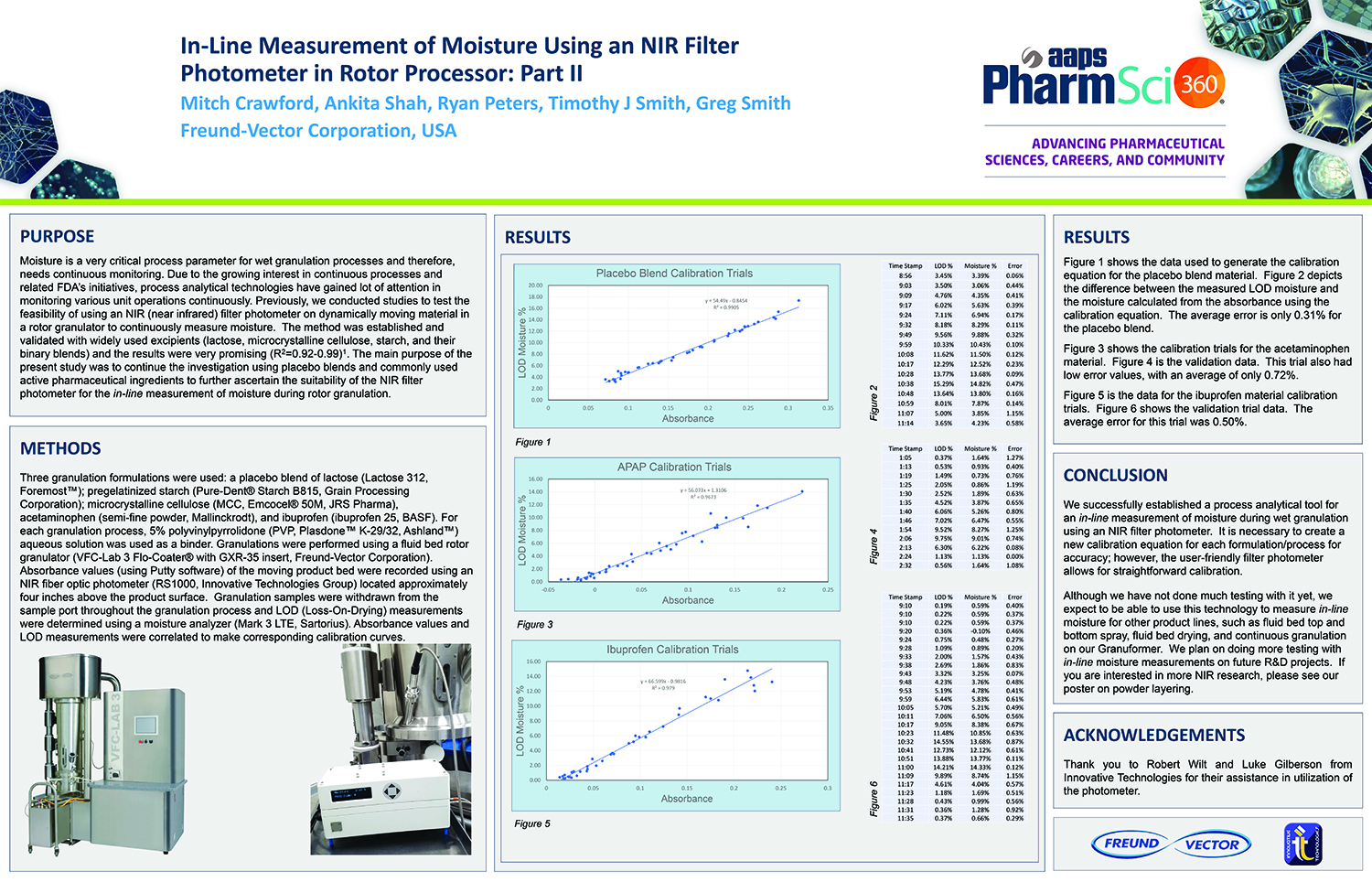
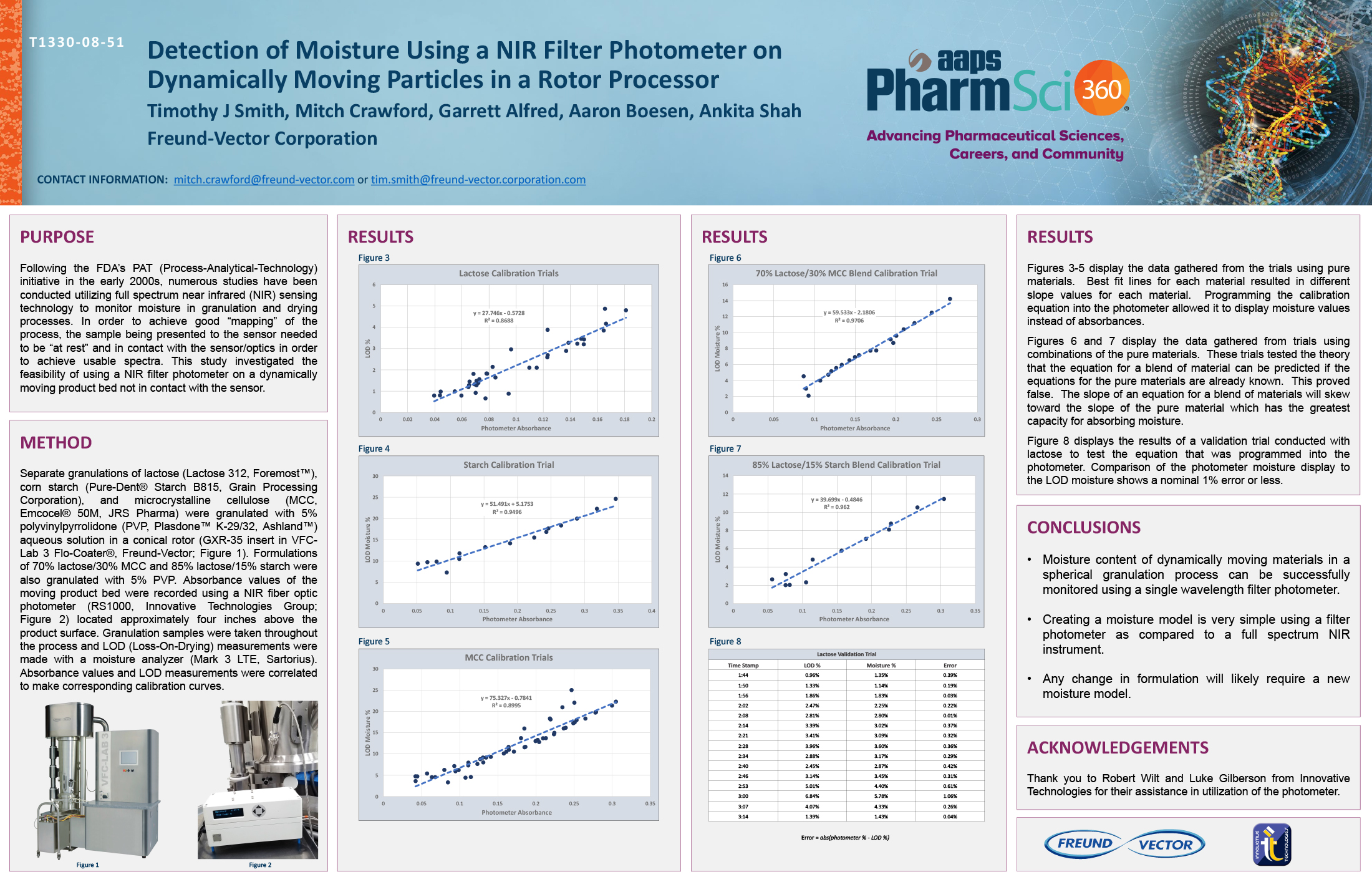
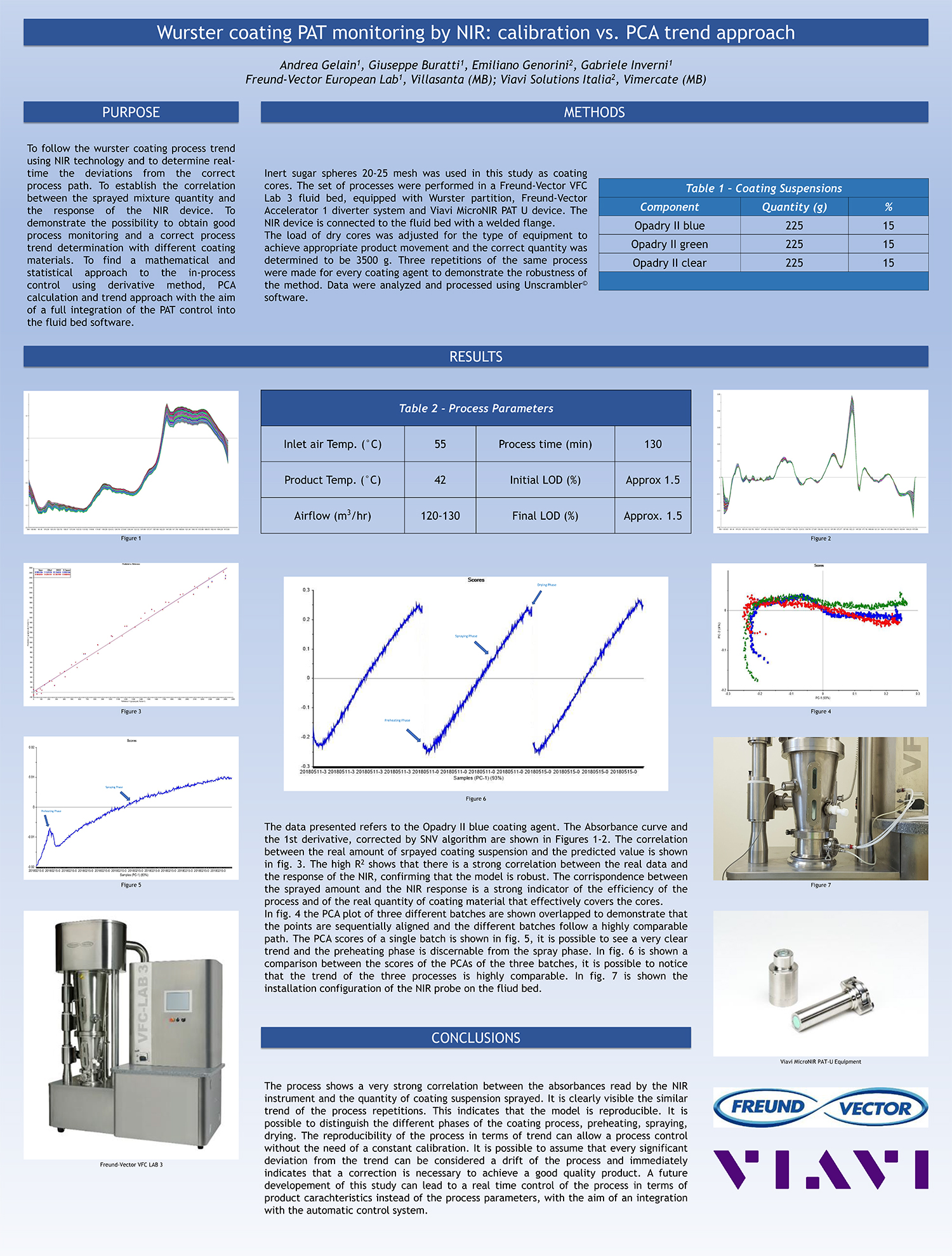
Moisture Endpoint Detection and Scale Up for Top Spray Granulation Technology

NIR spectroscopy provided significant advantages over offline moisture measurement in terms of time required for sample analysis without a drop off in accuracy. This allows real time moisture data to be taken throughout the entire batch without the need for sampling the product and allowing for quicker responses to process upsets than would otherwise be possible with traditional offline moisture measurements.

Continue

A Comparison of Spherical Core Materials Used for Controlled Release Drug Layering Processes

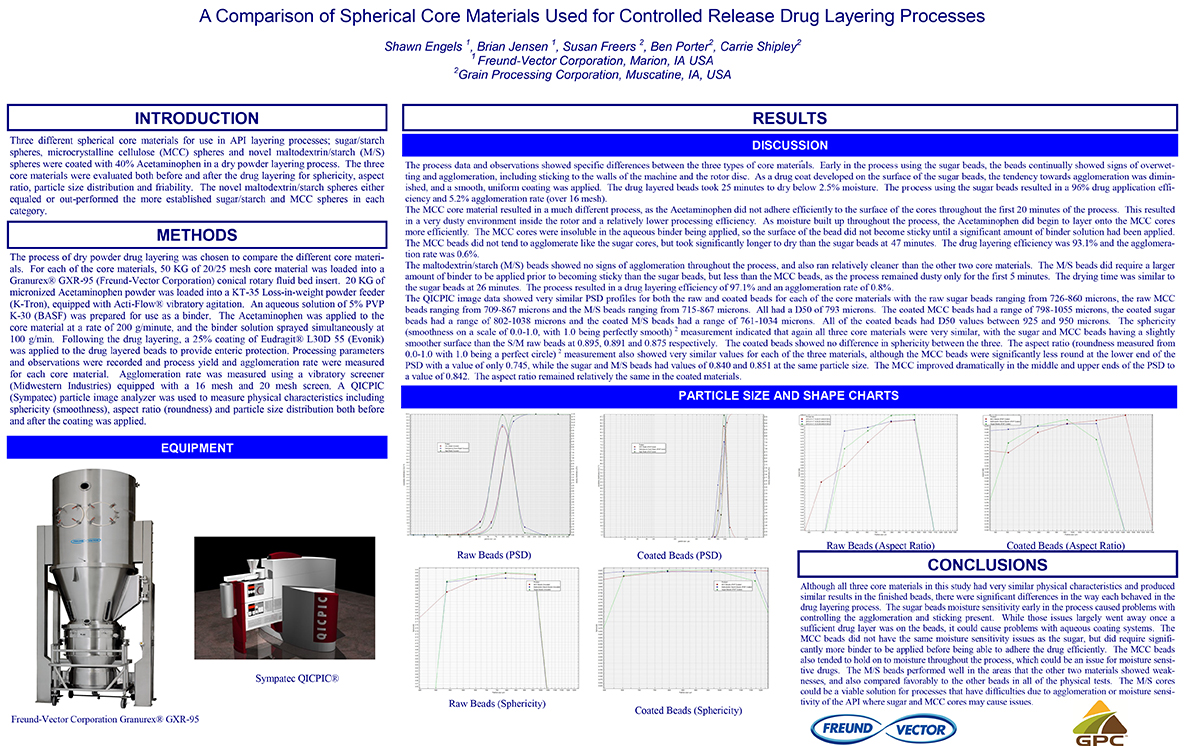
Three different spherical core materials for use in API layering processes; sugar/starch spheres, microcrystalline cellulose (MCC) spheres and novel maltodextrin/starch (M/S)
spheres were coated with 40% Acetaminophen in a dry powder layering process. The three core materials were evaluated both before and after the drug layering for sphericity, aspect ratio, particle size distribution and friability. The novel maltodextrin/starch spheres either equaled or out-performed the more established sugar/starch and MCC spheres in each category.

Continue

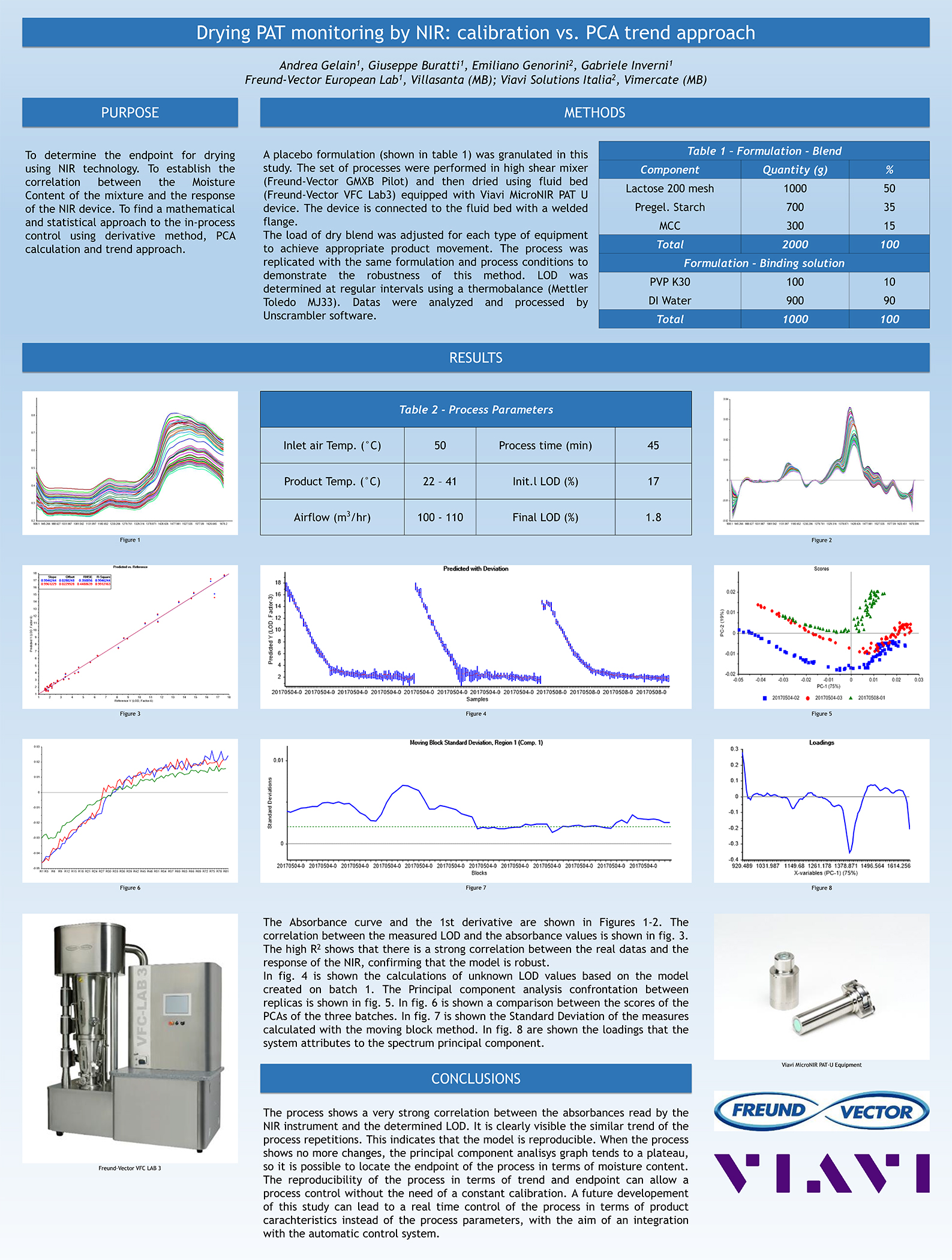
Drying PAT Monitoring by NIR: Calibration vs PCA Trend Approach

To determine the endpoint for drying using NIR technology. To establish the correlation between the Moisture Content of the mixture and the response of the NIR device. To find a mathematical and statistical approach to the in-process control using derivative method, PCA calculation and trend approach.

Continue

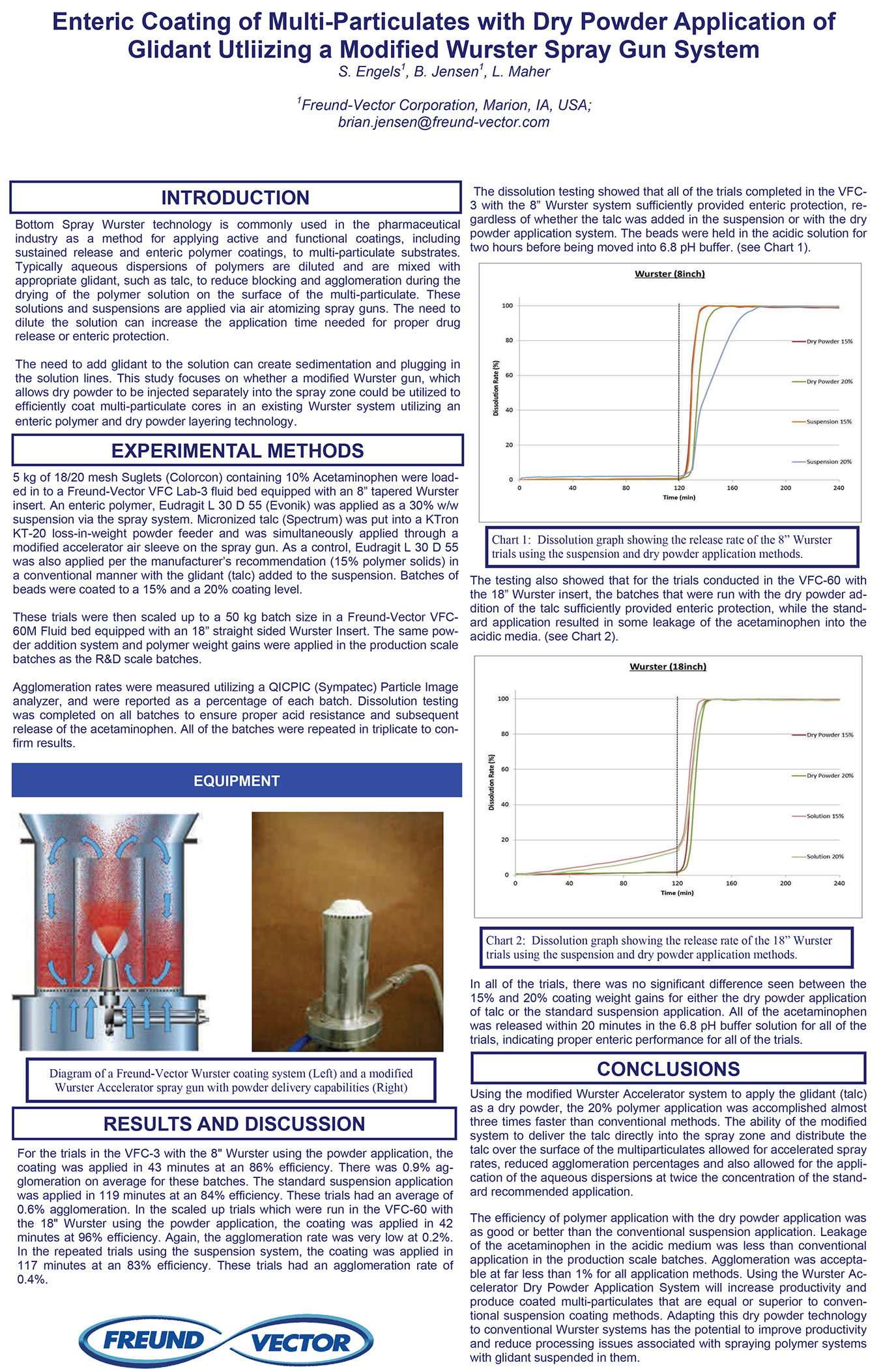
Enteric Coating of Multi-Particulates with Dry Powder Application of Glidant Utilizing a Modified Wurster Spray Gun System

Bottom Spray Wurster technology is commonly used in the pharmaceutical industry as a method for applying active and functional coatings, including sustained release and enteric polymer coatings, to multi-particulate substrates. Typically aqueous dispersion of polymers are diluted and are mixed with appropriate glidant, such as talc, to reduce blocking and agglomeration during the drying of the polymer solution on the surface of the multi-particulate. These solutions and suspensions are applied via air atomizing spray guns. The need to dilute the solution can increase the application time needed for proper drug release or enteric protection.

Continue

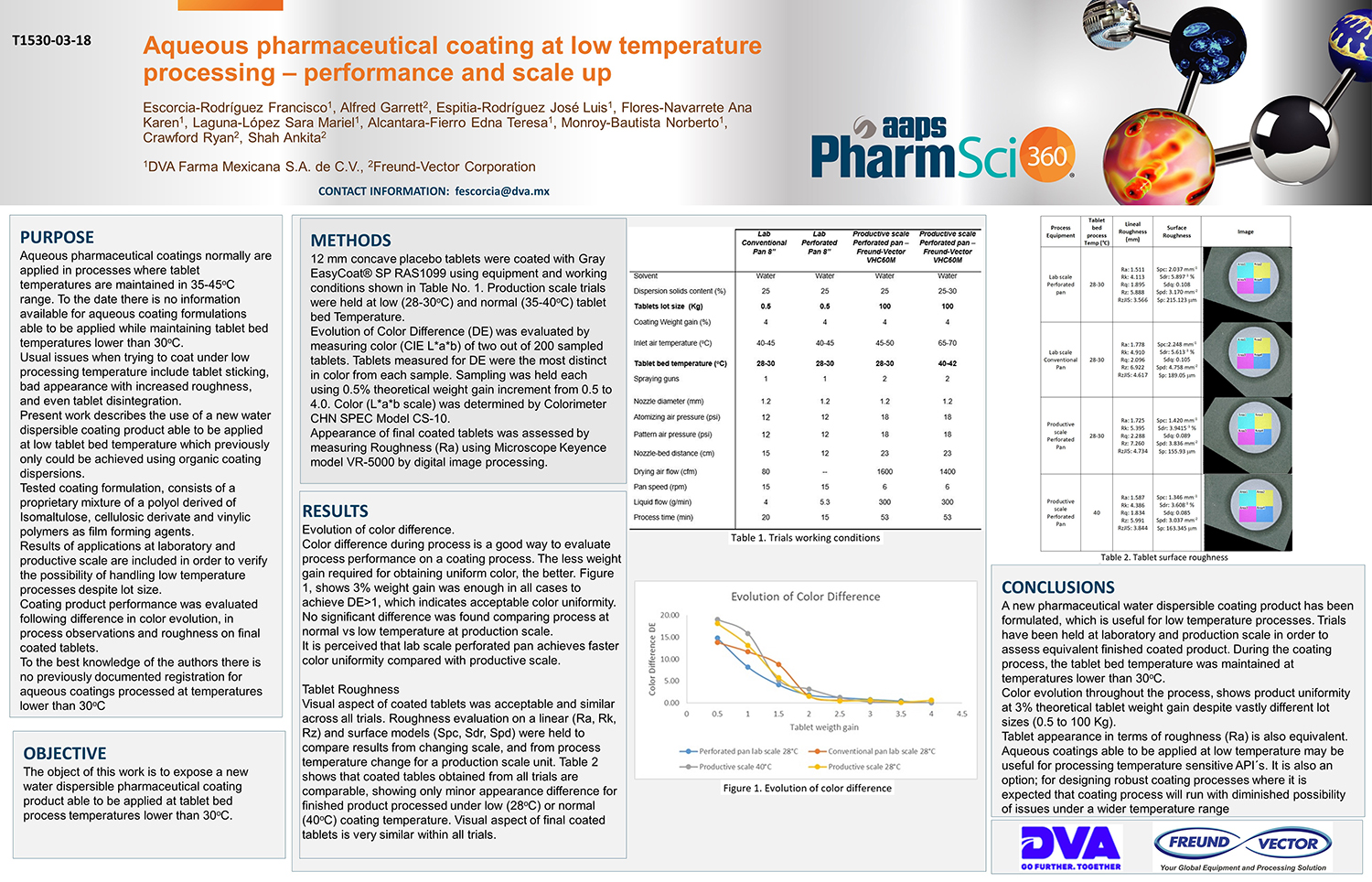
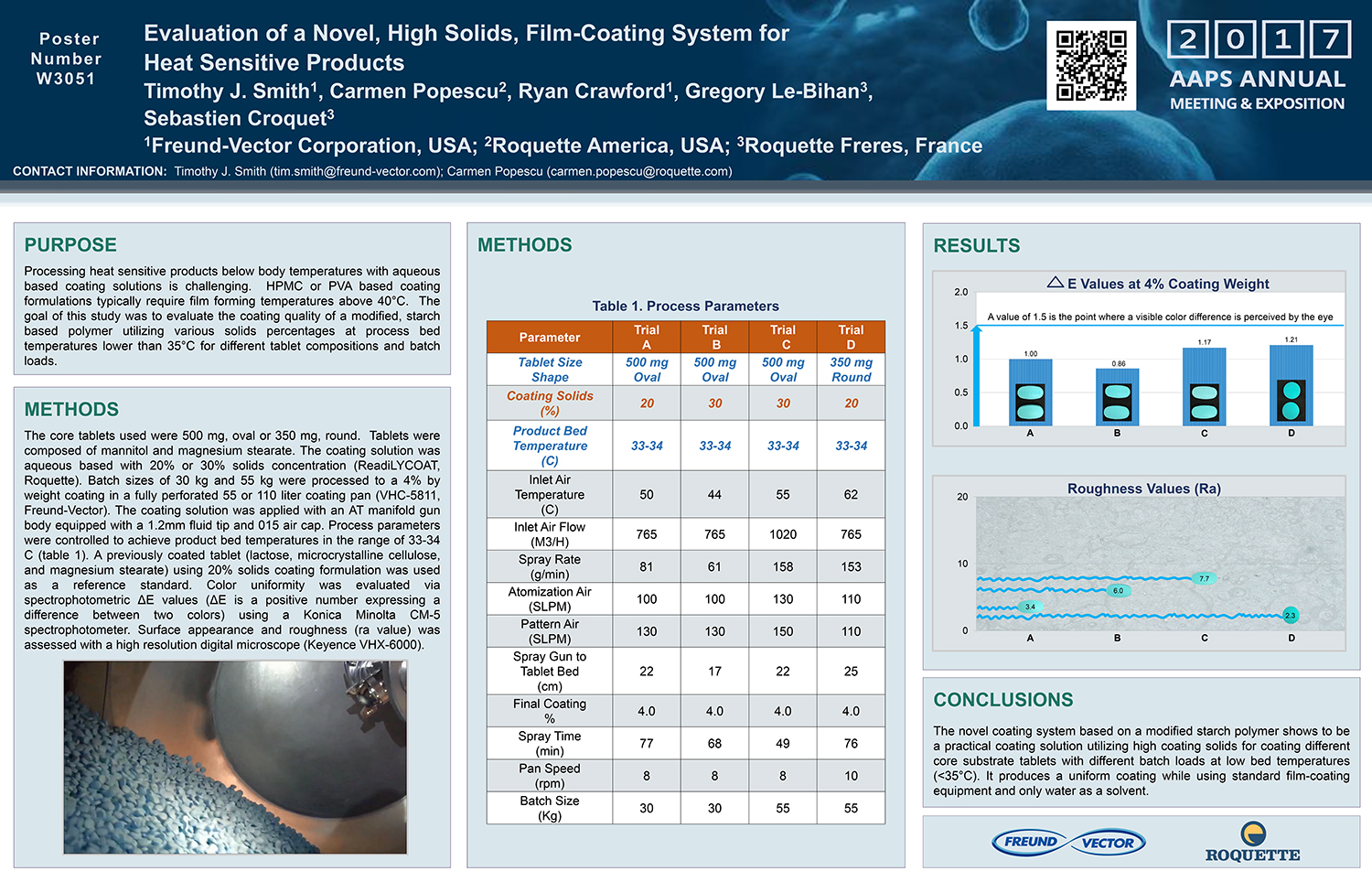
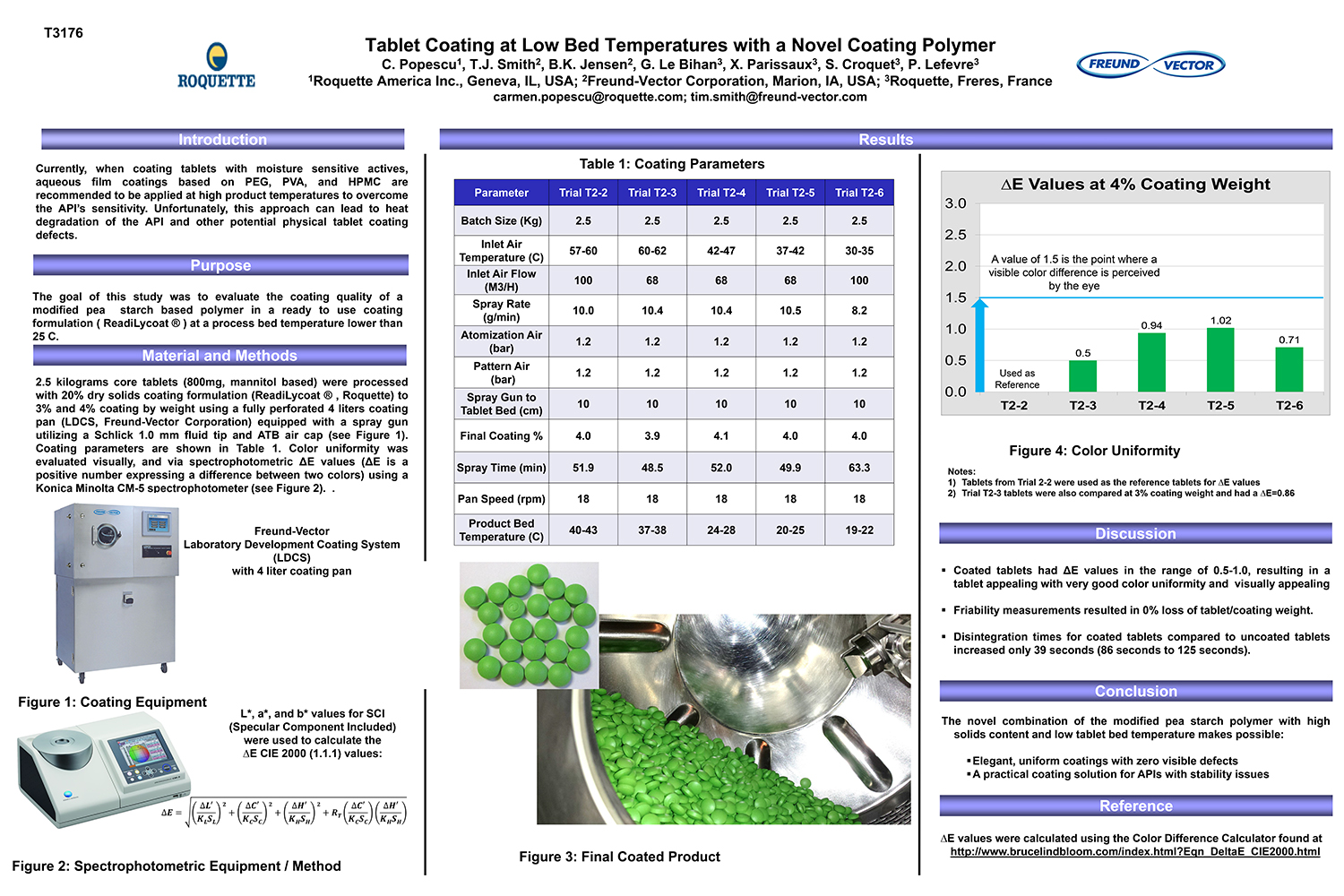
Evaluation of a Novel, High Solids, Film-Coating System for Temperature Sensitive Products

Processing heat sensitive products below body temperatures with aqueous based coating solutions is challenging. HPMC or PVA based coating formulations typically require film forming temperatures above 40°C. The goal of this study was to evaluate the coating quality of a modified, starch based polymer utilizing various solids percentages at process bed temperatures lower than 35°C for different tablet compositions and batch loads.

Continue

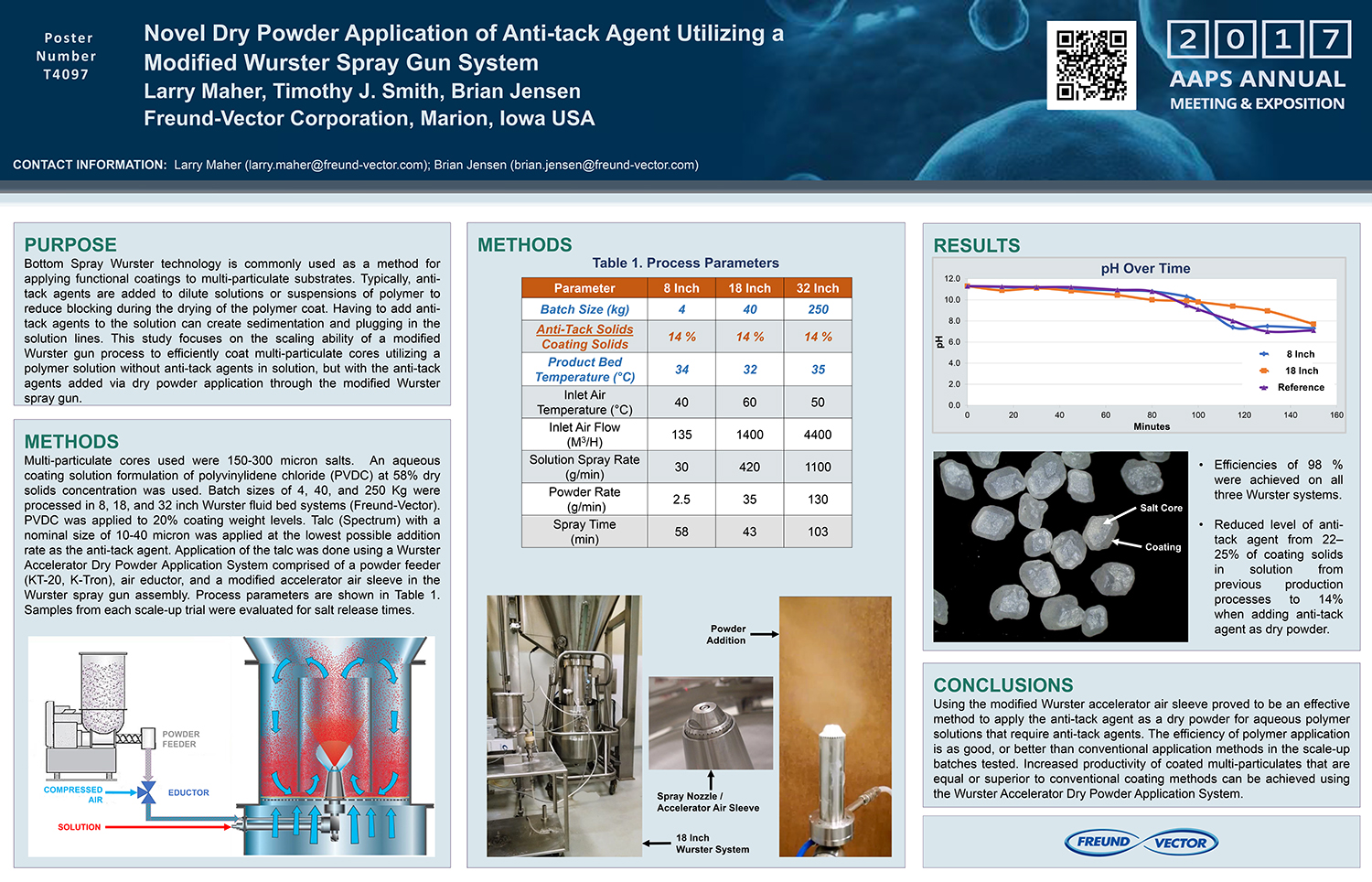
Novel Dry Powder Application of Anti-Tack Agent Utilizing a Modified Wurster Spray Gun System

Bottom Spray Wurster technology is commonly used as a method for applying functional coatings to multi-particulate substrates. Typically, antitack agents are added to dilute solutions or suspensions of polymer to reduce blocking during the drying of the polymer coat. Having to add antitack agents to the solution can create sedimentation and plugging in the solution lines. This study focuses on the scaling ability of a modified Wurster gun process to efficiently coat multi-particulate cores utilizing a polymer solution without anti-tack agents in solution, but with the anti-tack agents added via dry powder application through the modified Wurster spray gun.

Continue

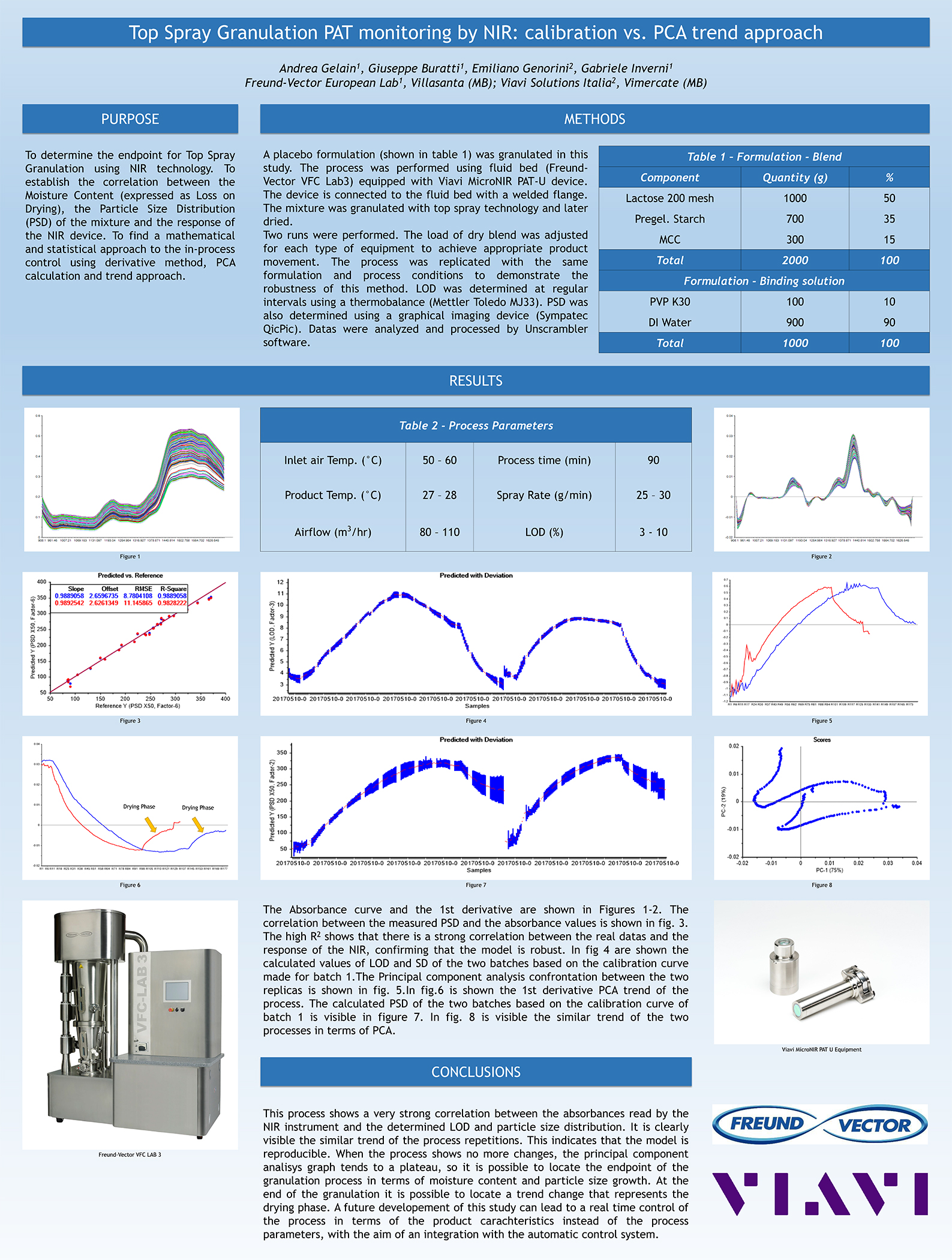
Top Spray Granulation PAT Monitoring by NIR: Calibration vs. PCA Trend Approach

To determine the endpoint for Top Spray Granulation using NIR technology. To establish the correlation between the Moisture Content (expressed as Loss on Drying), the Particle Size Distribution (PSD) of the mixture and the response of the NIR device. To find a mathematical and statistical approach to the in-process control using derivative method, PCA calculation and trend approach.

Continue

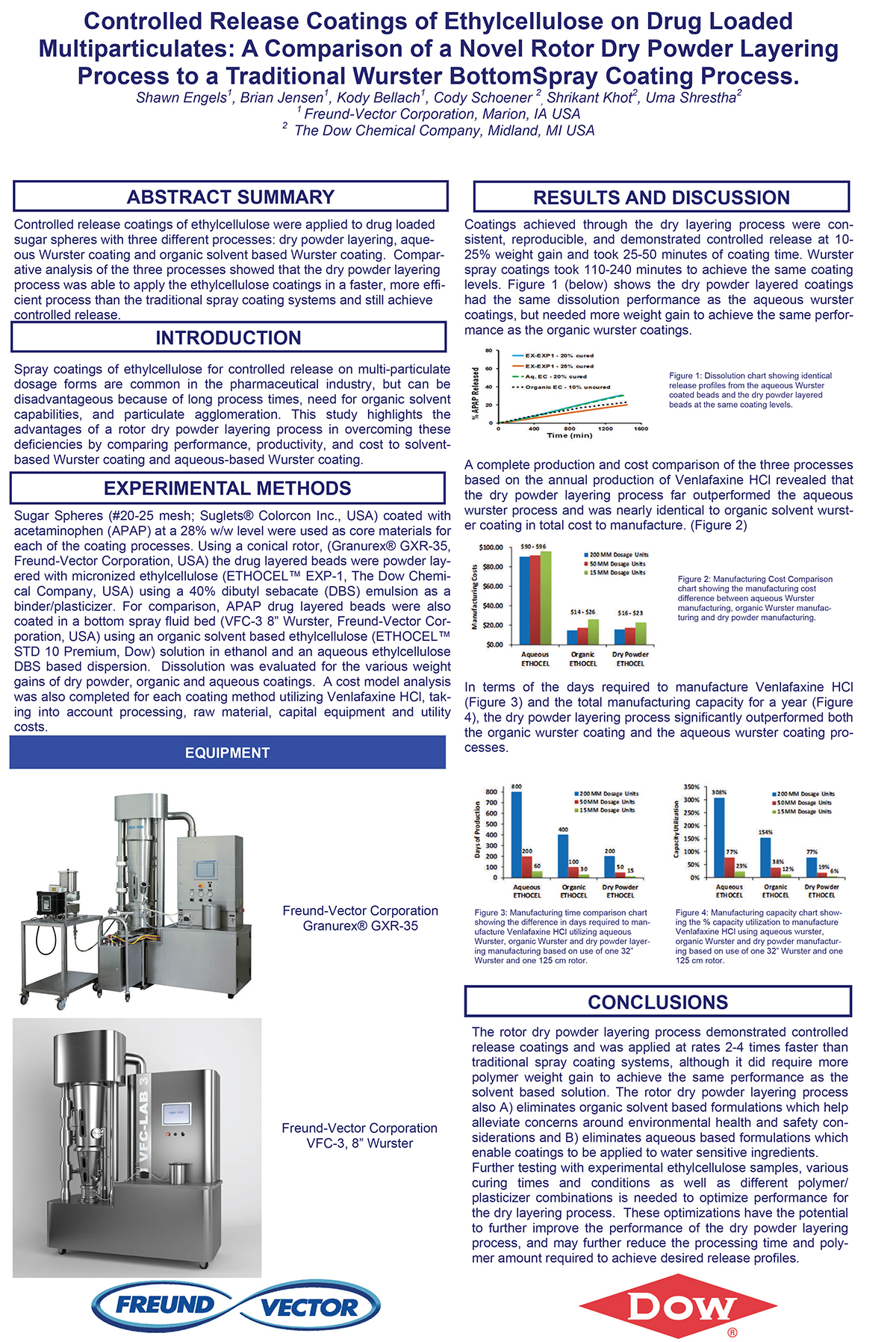
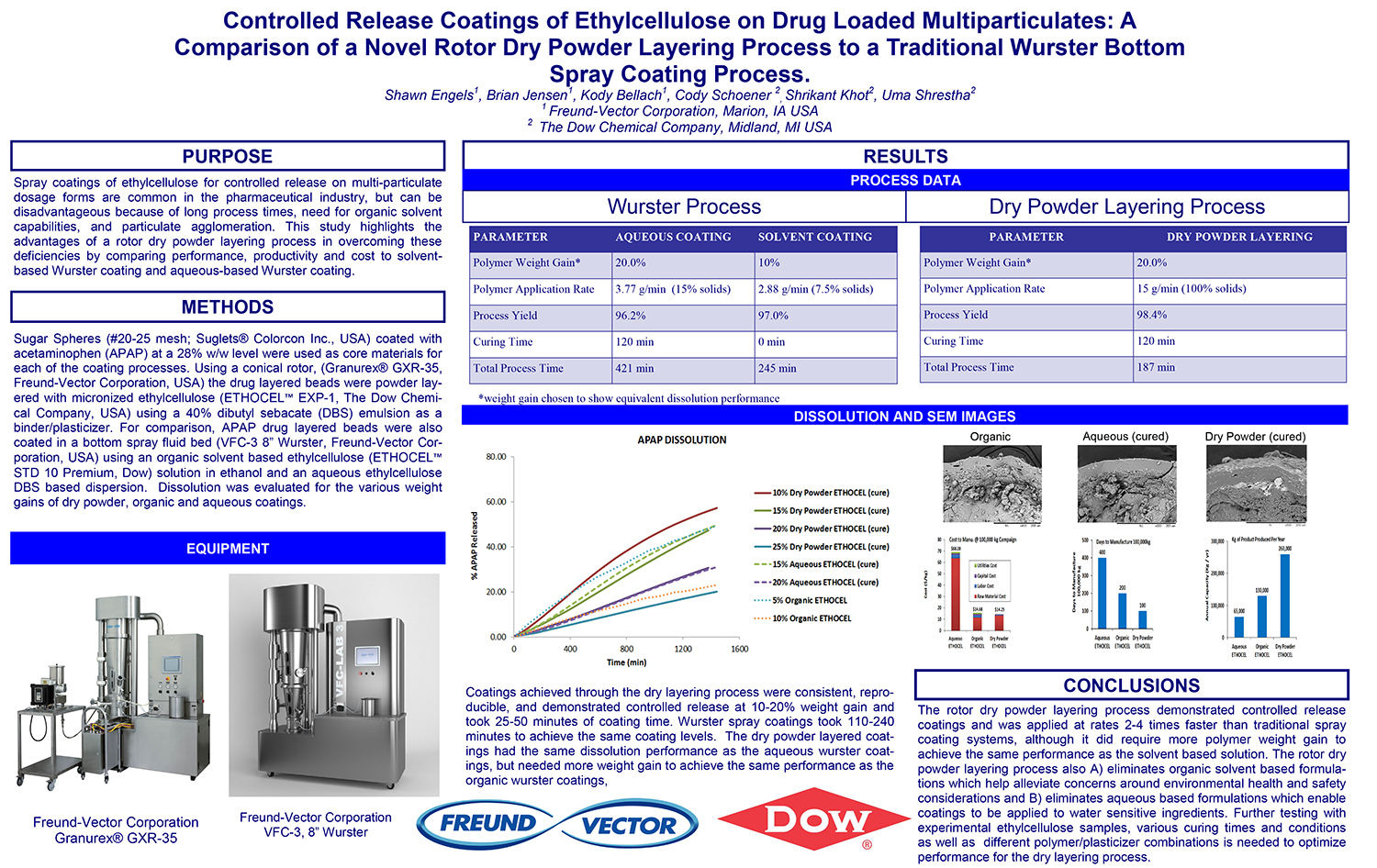
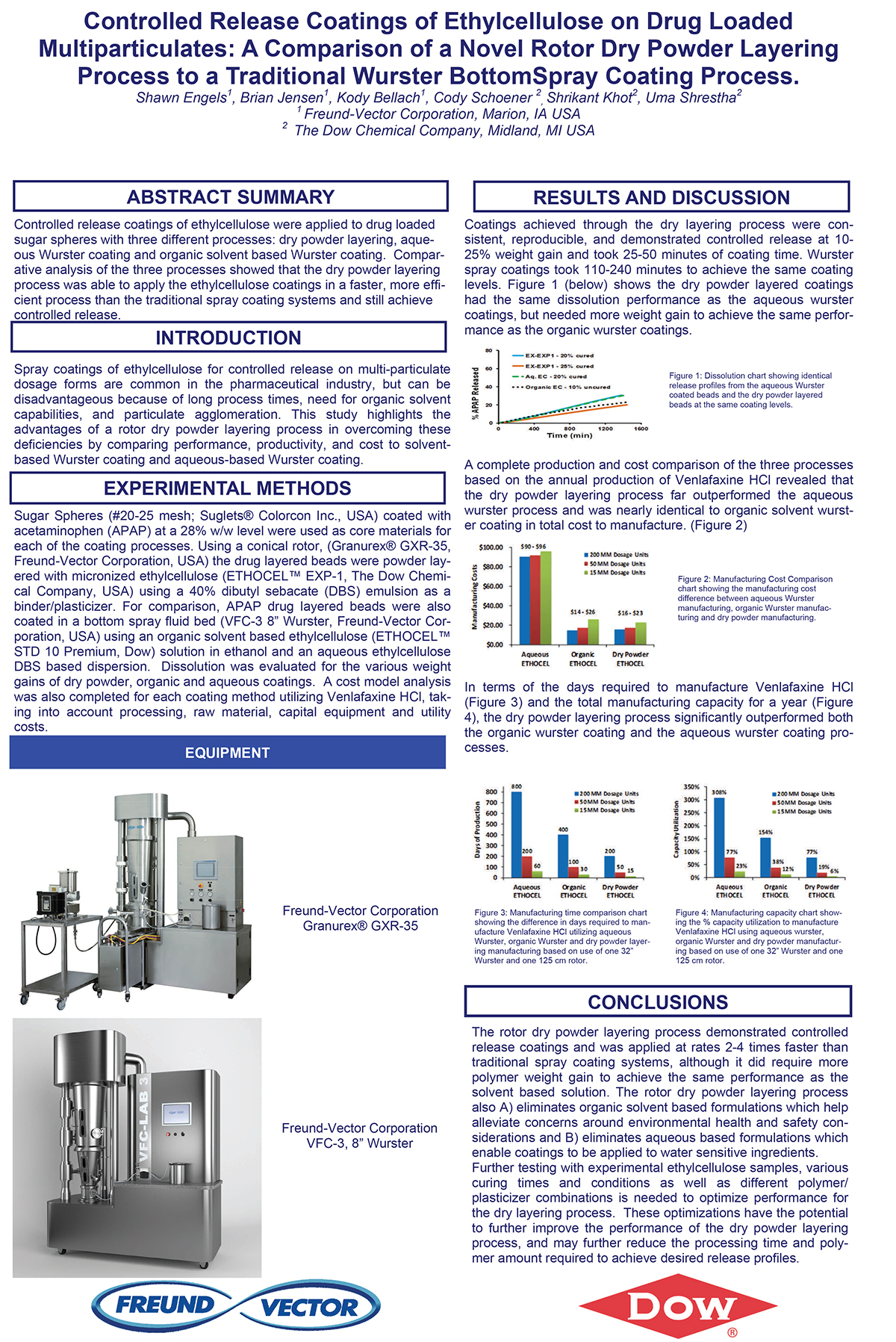
Controlled Release Coatings of Ethylcellulose on Drug Loaded Multiparticulates – A Comparison of a Novel Rotor Dry Powder Layering Process to a Traditional Wurster BottomSpray Coating Process

Controlled release coatings of ethylcellulose were applied to drug loaded sugar spheres with three different processes: dry powder layering, aqueous Wurster coating and organic solvent based Wurster coating. Comparative analysis of the three processes showed that the dry powder layering process was able to apply the ethylcellulose coatings in a faster, more efficient process than the traditional spray coating systems and still achieve controlled release.

Continue

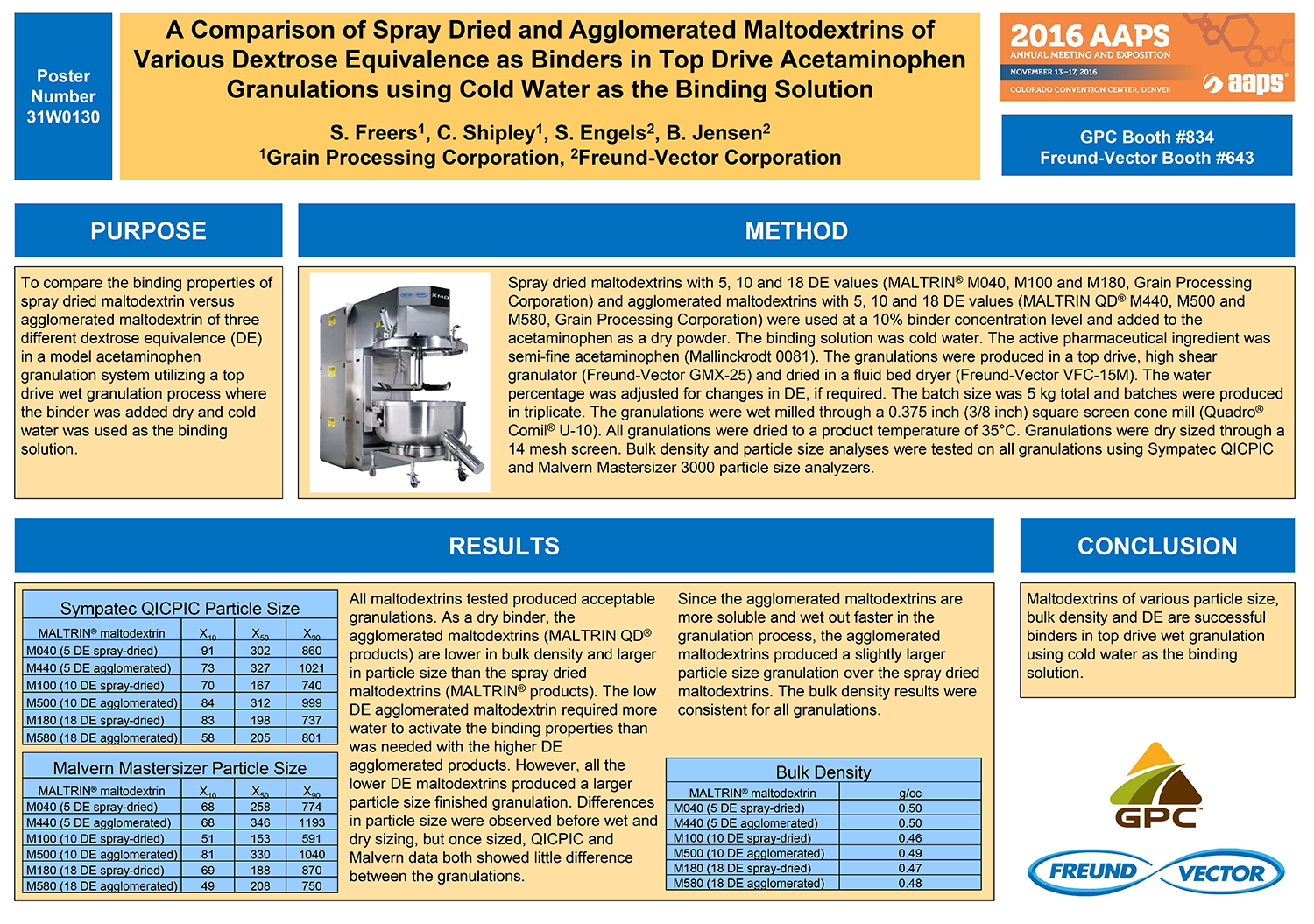
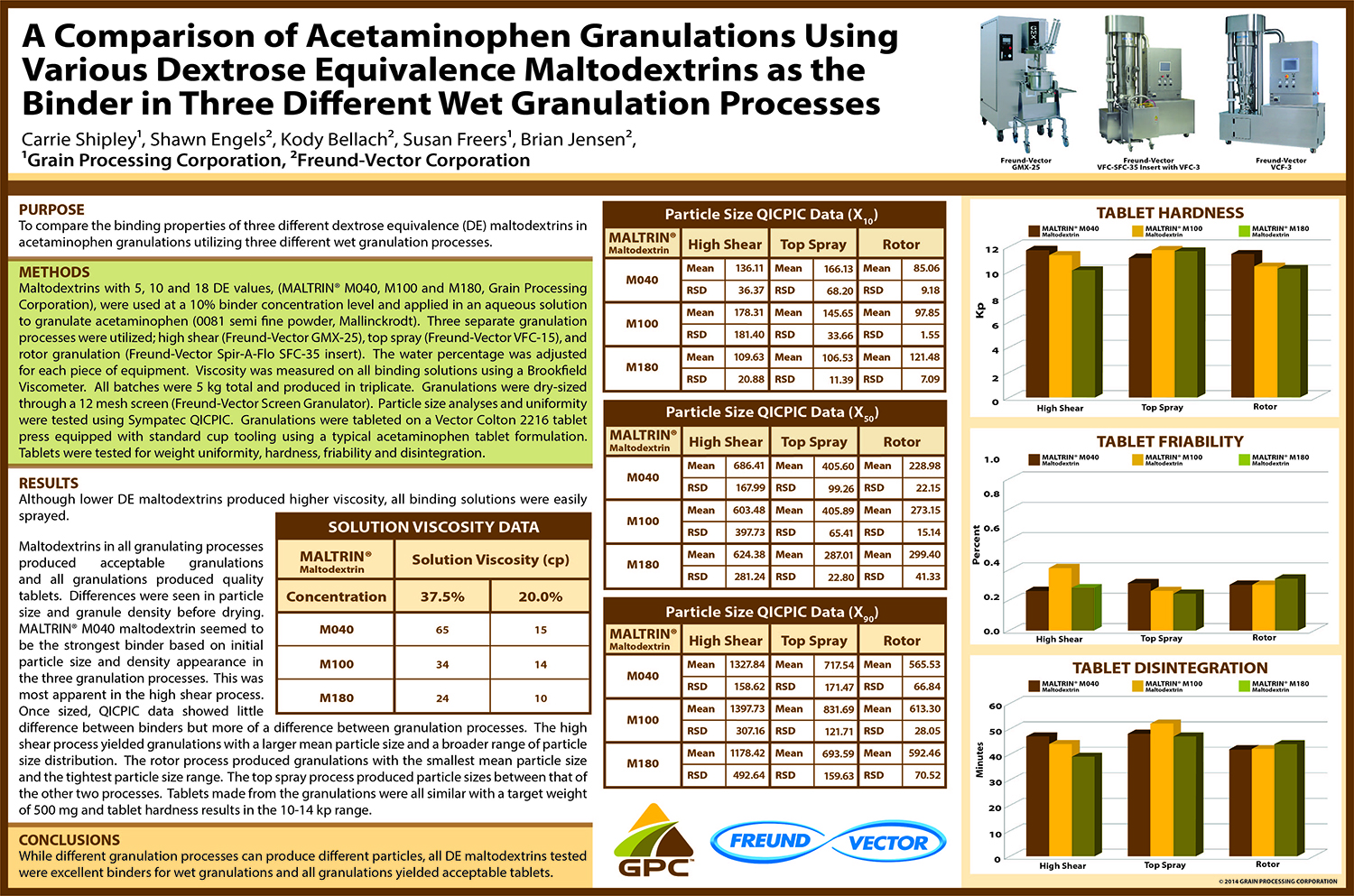
A Comparison of Spray Dried and Agglomerated Maltodextrins of Various Dextrose Equivalence as Binders in Top Drive Acetaminophen Granulations Using Cold Water as the Binding Solution

To compare the binding properties of spray dried maltodextrin versus agglomerated maltodextrin of three different dextrose equivalence (DE) in a model acetaminophen granulation system utilizing a top drive wet granulation process where the binder was added dry and cold water was used as the binding solution.

Continue

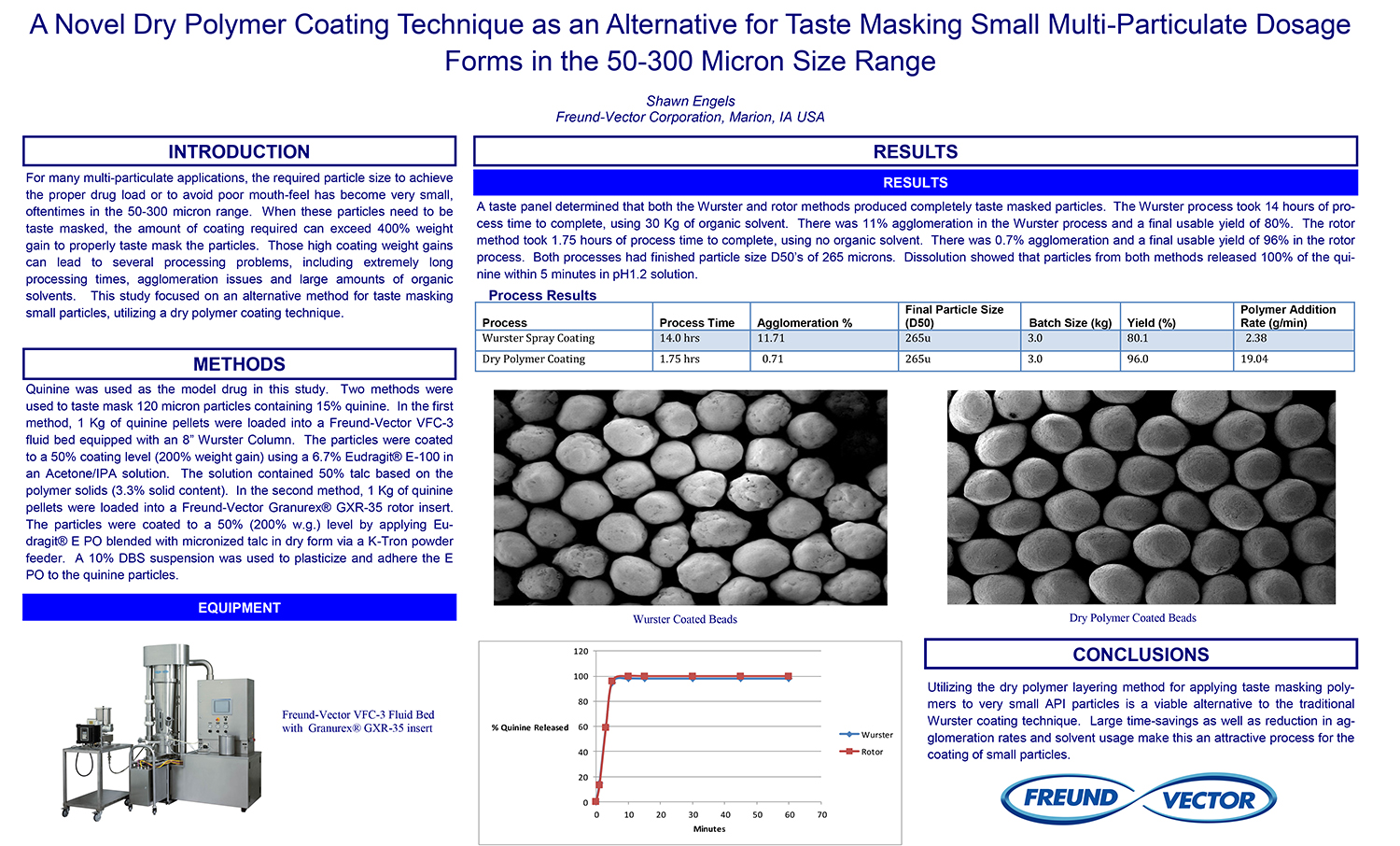
A Novel Dry Polymer Coating Technique as an Alternative for Taste Masking Small Multi-Particulate Dosage Forms in the 50-300 Micron Size Range

For many multi-particulate applications, the required particle size to achieve the proper drug load or to avoid poor mouth-feel has become very small, oftentimes in the 50-300 micron range. When these particles need to be taste masked, the amount of coating required can exceed 400% weight gain to properly taste mask the particles. Those high coating weight gains can lead to several processing problems, including extremely long processing times, agglomeration issues and large amounts of organic solvents. This study focused on an alternative method for taste masking small particles, utilizing a dry polymer coating technique.

Continue

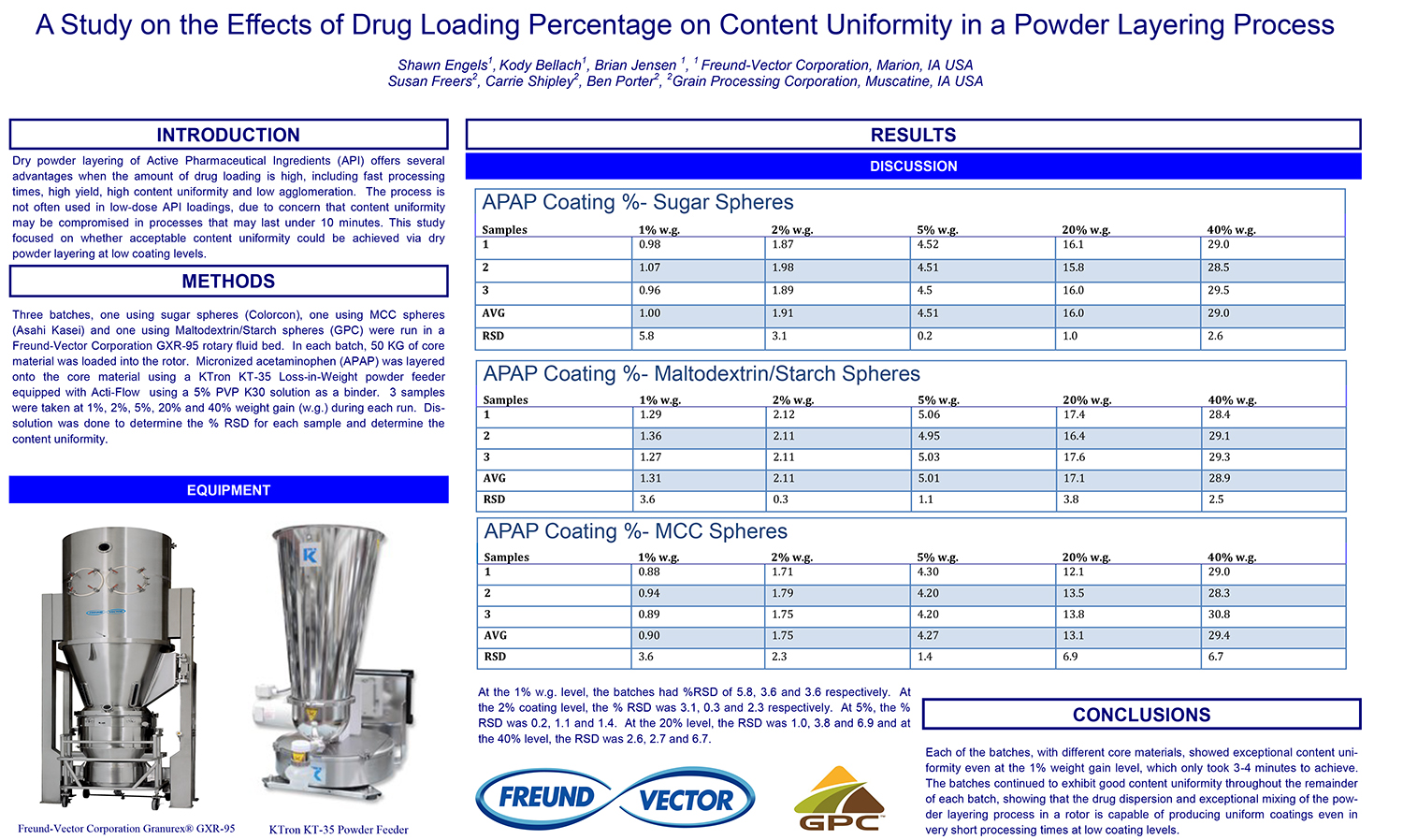
A Study on the Effects of Drug Loading Percentage on Content Uniformity in a Powder Layering Process

Dry powder layering of Active Pharmaceutical Ingredients (API) offers several advantages when the amount of drug loading is high, including fast processing times, high yield, high content uniformity and low agglomeration. The process is not often used in low-dose API loading, due to concern that content uniformity may be compromised in processes that may last under 10 minutes. This study focused on whether acceptable content uniformity could be achieved via dry powder layering at low coating levels.

Continue

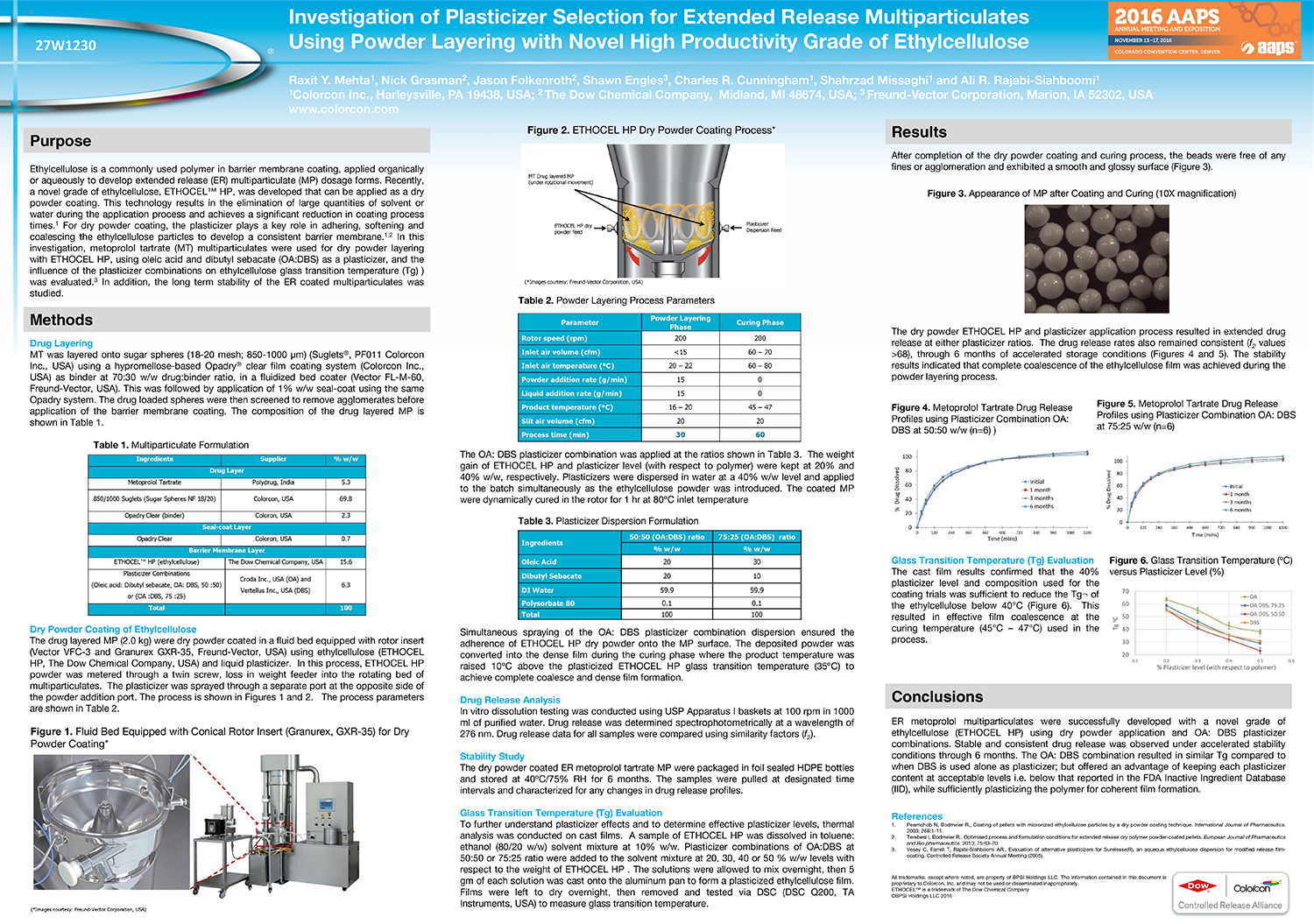
Investigation of Plasticizer Selection for Extended Release Multiparticulates Using Powder Layering with Novel High Productivity Grade of Ethylcellulose

Ethylcellulose is a commonly used polymer in barrier membrane coating, applied organically or aqueously to develop extended release (ER) multiparticulate (MP) dosage forms. Recently, a novel grade of ethylcellulose, ETHOCEL™HP, was developed that can be applied as a dry powder coating. This technology results in the elimination of large quantities of solvent or water during the application process and achieves a significant reduction in coating process times.1 For dry powder coating, the plasticizer plays a key role in adhering, softening and coalescing the ethylcellulose particles to develop a consistent barrier membrane.1,2 In this investigation, metoprolol tartrate (MT) multiparticulates were used for dry powder layering with ETHOCEL HP, using oleic acid and dibutyl sebacate (OA:DBS) as a plasticizer, and the influence of the plasticizer combinations on ethylcellulose glass transition temperature (Tg) ) was evaluated.3 In addition, the long term stability of the ER coated multiparticulates was studied.

Continue

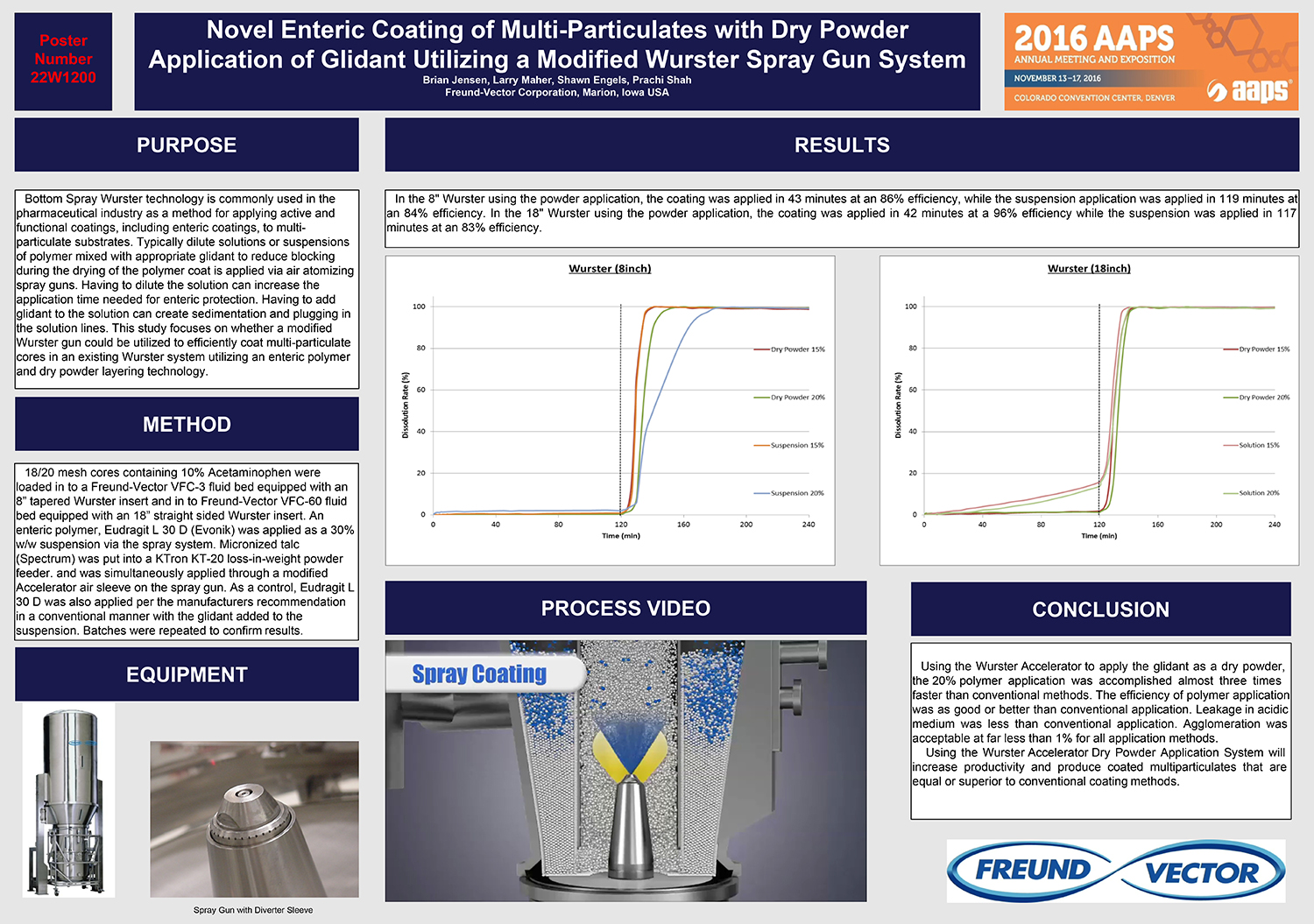
Novel Enteric Coating of Multi-Particulates with Dry Powder Application of Glidant Utilizing a Modified Wurster Spray Gun System

Bottom Spray Wurster technology is commonly used in the pharmaceutical industry as a method for applying active and functional coatings, including enteric coatings, to multiparticulate substrates. Typically dilute solutions or suspensions of polymer mixed with appropriate glidant to reduce blocking during the drying of the polymer coat is applied via air atomizing spray guns. Having to dilute the solution can increase the application time needed for enteric protection.

Continue

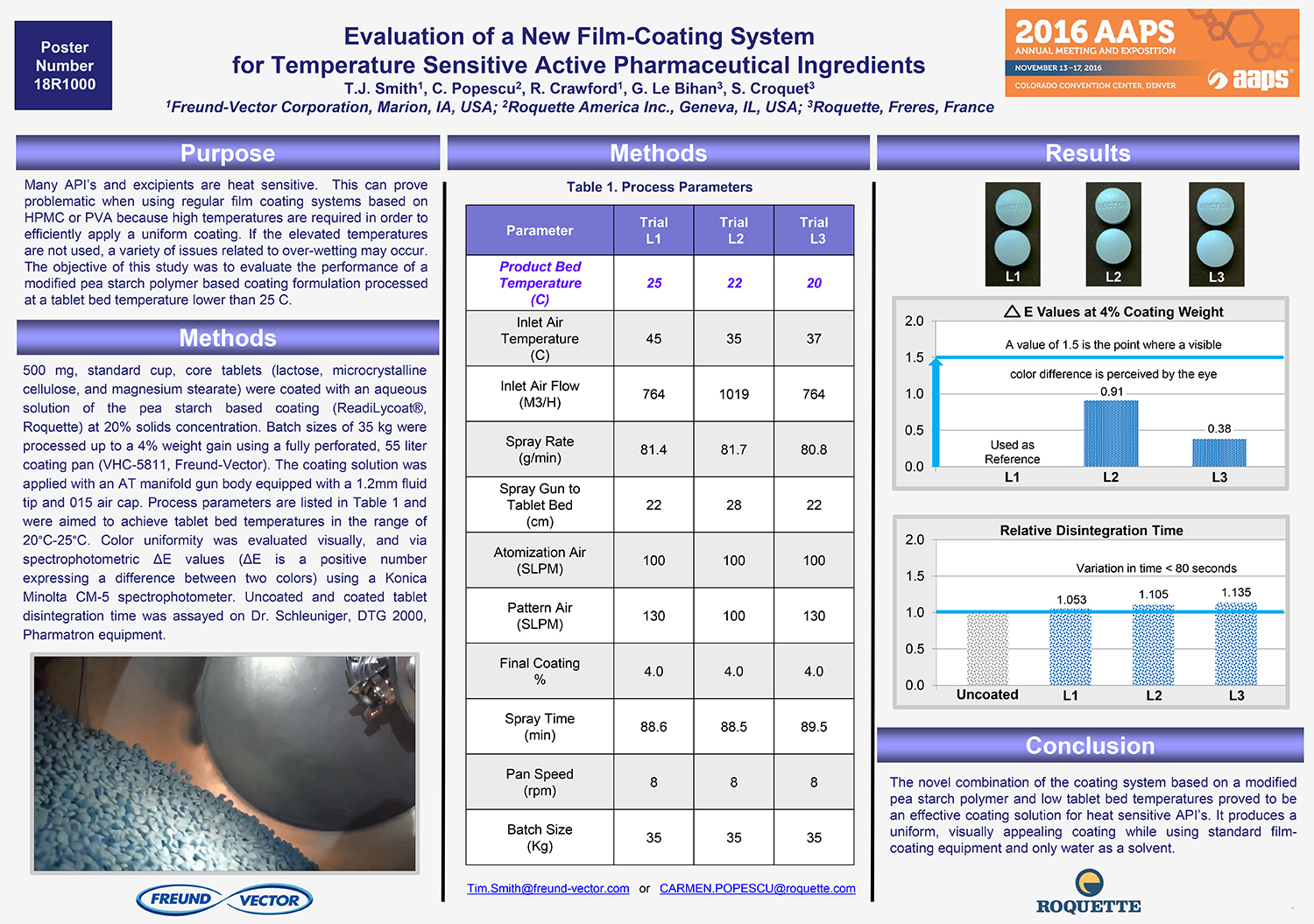
Evaluation of a New Film-Coating System for Temperature Sensitive Active Pharmaceutical Ingredients

Many API’s and excipients are heat sensitive. This can prove problematic when using regular film coating systems based on HPMC or PVA because high temperatures are required in order to efficiently apply a uniform coating. If the elevated temperatures are not used, a variety of issues related to over-wetting may occur. The objective of this study was to evaluate the performance of a modified pea starch polymer based coating formulation processed at a tablet bed temperature lower than 25 C.

Continue

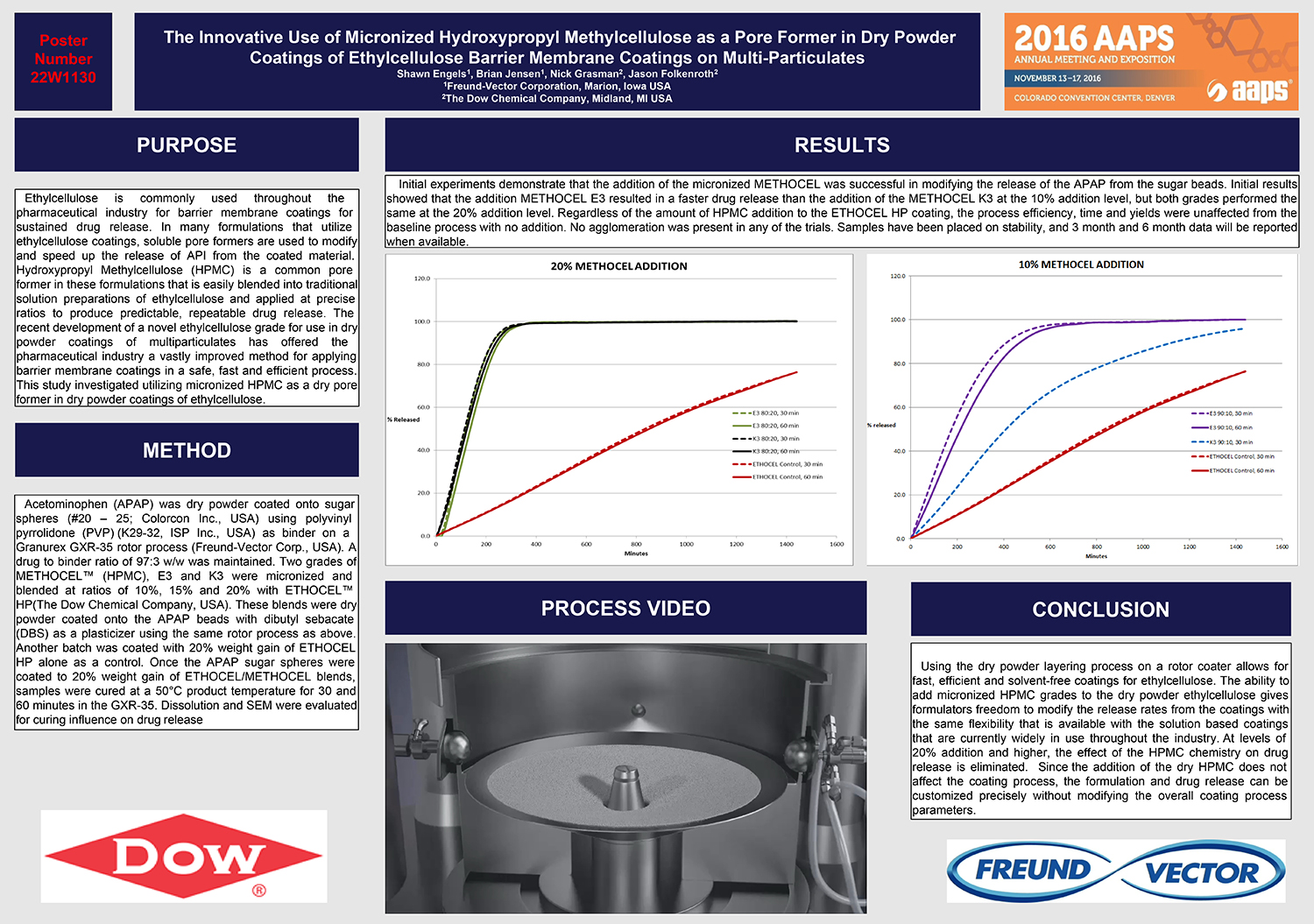
The Innovative Use of Micronized Hydroxypropyl Methylcellulose as a Pore Former in Dry Powder Coatings of Ethylcellulose Barrier Membrane Coatings on Multi-Particulates

Ethylcellulose is commonly used throughout the pharmaceutical industry for barrier membrane coatings for sustained drug release. In many formulations that utilize ethylcellulose coatings, soluble pore formers are used to modify and speed up the release of API from the coated material. Hydroxypropyl Methylcellulose (HPMC) is a common pore former in these formulations that is easily blended into traditional solution preparations of ethylcellulose and applied at precise ratios to produce predictable, repeatable drug release. The recent development of a novel ethylcellulose grade for use in dry powder coatings of multiparticulates has offered the pharmaceutical industry a vastly improved method for applying barrier membrane coatings in a safe, fast and efficient process.

Continue

Coatings of Ethylcellulose on Drug Loaded Multiparticulates – A Comparison of Rotor Dry Powder Layering to a Wurster Bottom Spray Coating Process

Controlled release coatings of ethylcellulose were applied to drug loaded sugar spheres with three different processes: dry powder layering, aqueous Wurster coating and organic solvent based Wurster coating. Comparative analysis of the three processes showed that the dry powder layering process was able to apply the ethylcellulose coatings in a faster, more efficient process than the traditional spray coating systems and still achieve controlled release.

Continue

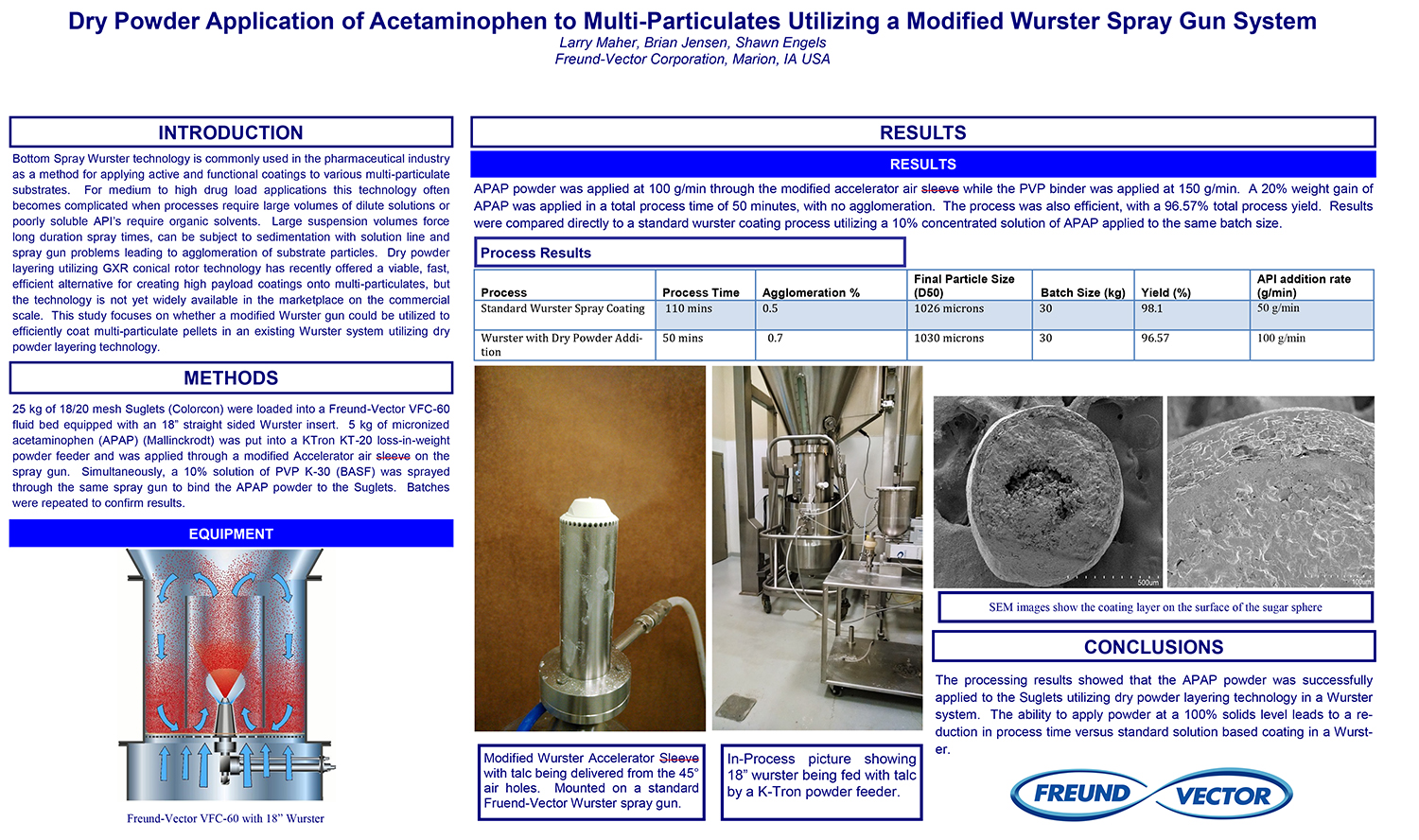
Dry Powder Application of Acetaminophen to Multi-Particulates Utilizing a Modified Wurster Spray Gun System

Bottom Spray Wurster technology is commonly used in the pharmaceutical industry as a method for applying active and functional coatings to various multi-particulate substrates. For medium to high drug load applications this technology often becomes complicated when processes require large volumes of dilute solutions or poorly soluble API’s require organic solvents. Large suspension volumes force long duration spray times, can be subject to sedimentation with solution line and spray gun problems leading to agglomeration of substrate particles.

Continue

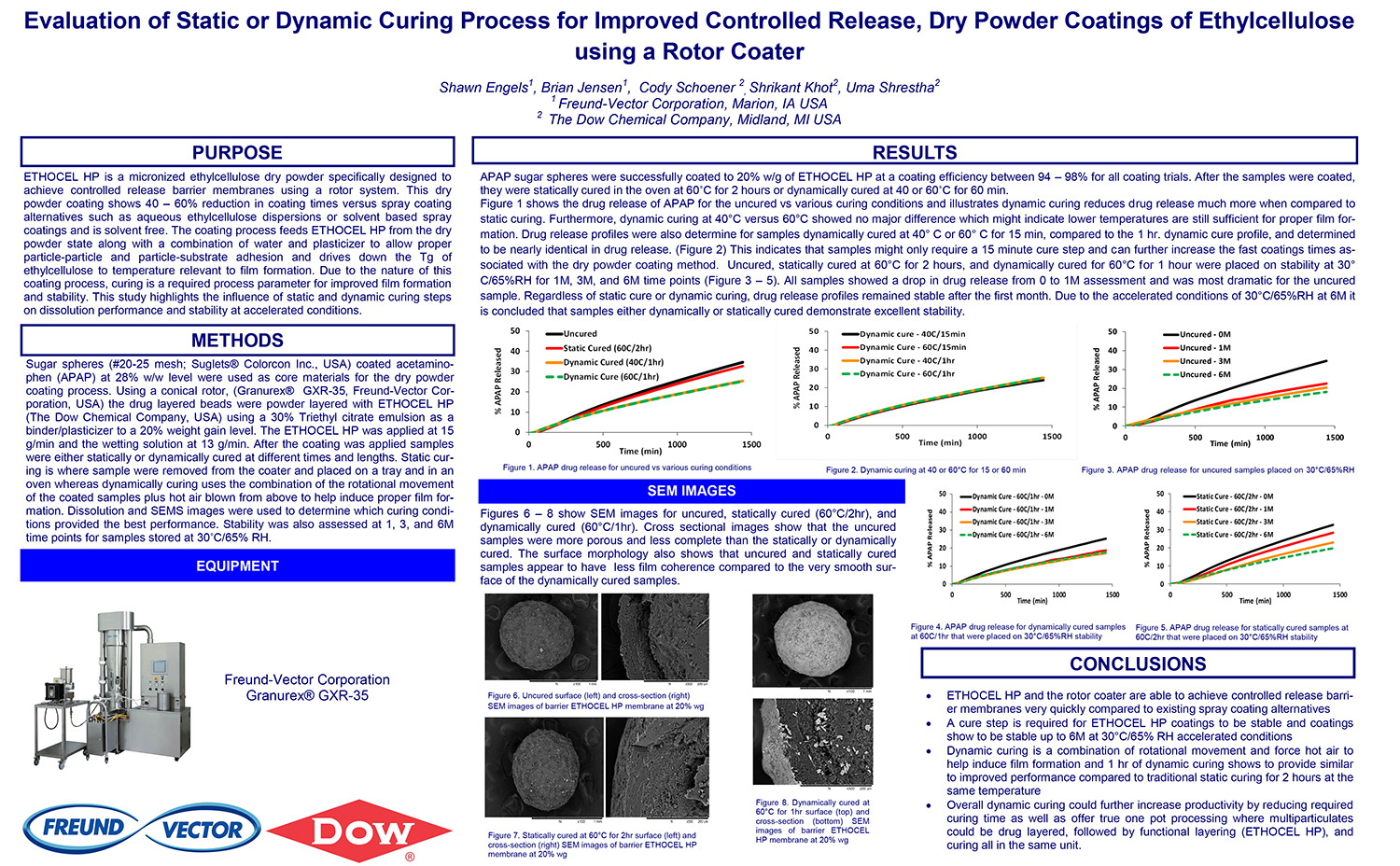
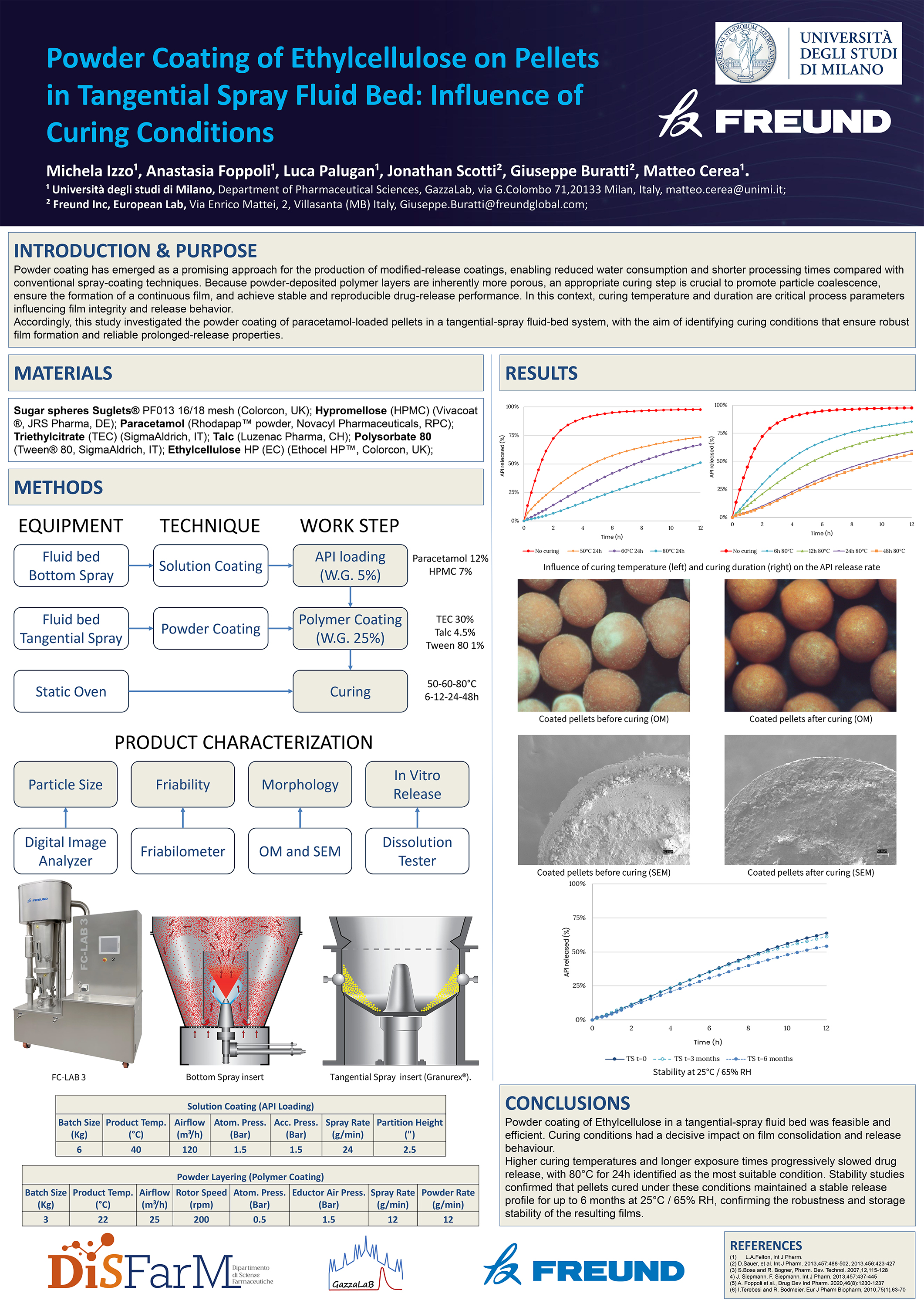
Evaluation of Static or Dynamic Curing Process for Improved Controlled Release, Dry powder coatings of Ethylcellulose using a Rotor Coater

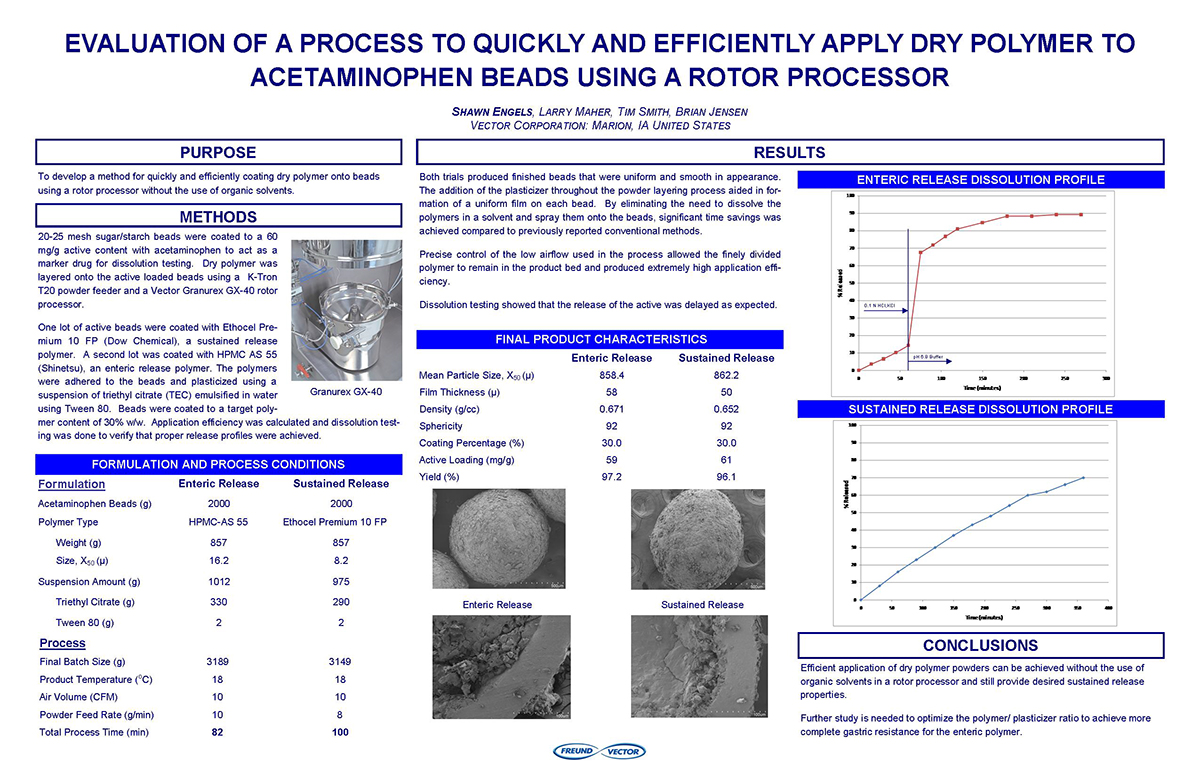
ETHOCEL HP is a micronized ethylcellulose dry powder specifically designed to achieve controlled release barrier membranes using a rotor system. This dry powder coating shows 40 – 60% reduction in coating times versus spray coating alternatives such as aqueous ethylcellulose dispersions or solvent based spray coatings and is solvent free. The coating process feeds ETHOCEL HP from the dry powder state along with a combination of water and plasticizer to allow proper particle-particle and particle-substrate adhesion and drives down the Tg of ethylcellulose to temperature relevant to film formation. Due to the nature of this coating process, curing is a required process parameter for improved film formation and stability. This study highlights the influence of static and dynamic curing steps on dissolution performance and stability at accelerated conditions.

Continue

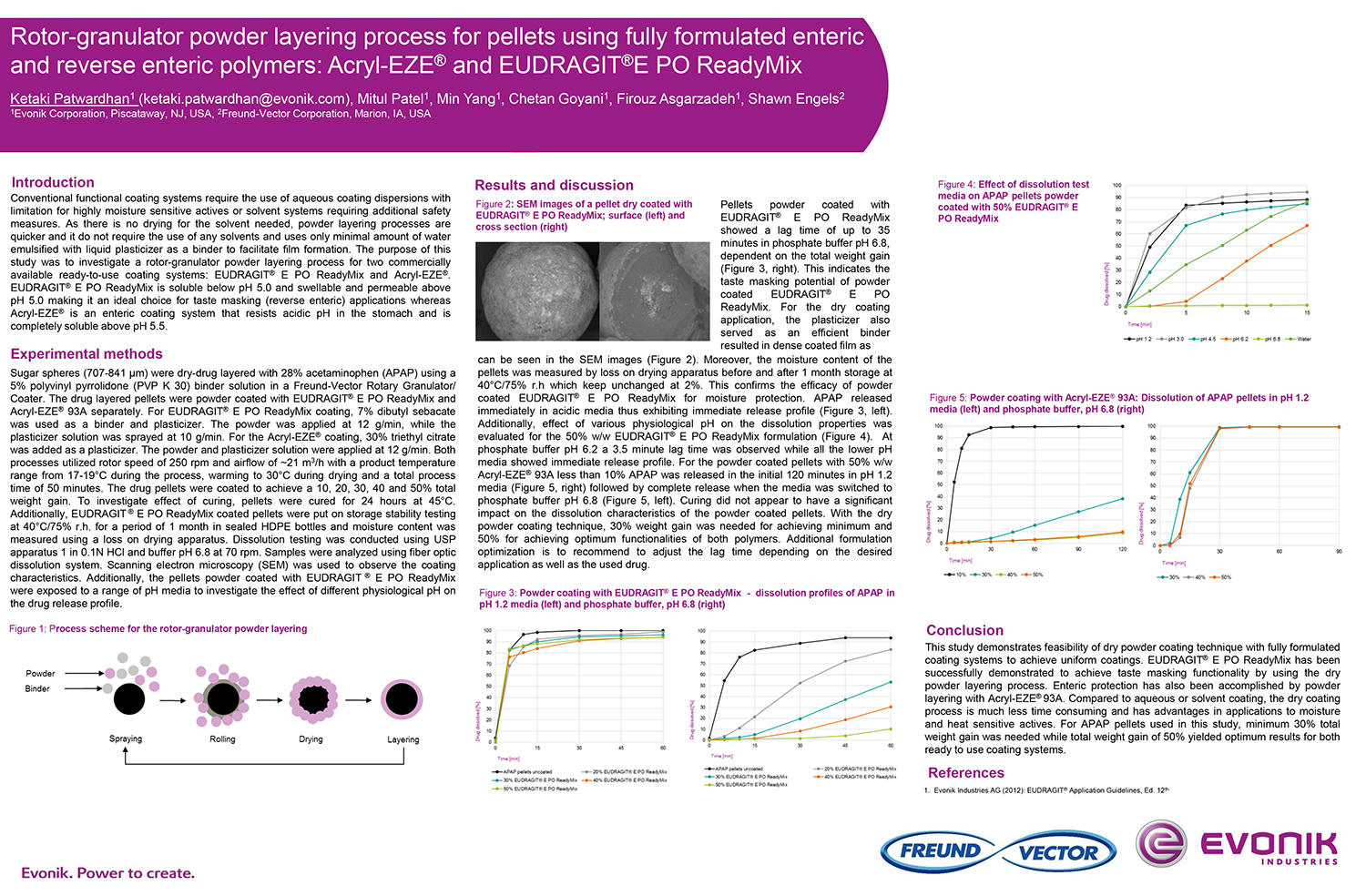
Rotor Granulator Powder Layering Process for Pellets using Fully Formulated Enteric and Reverse Eneric Polymers Acryl-EZE and Eudragit E PO ReadyMix

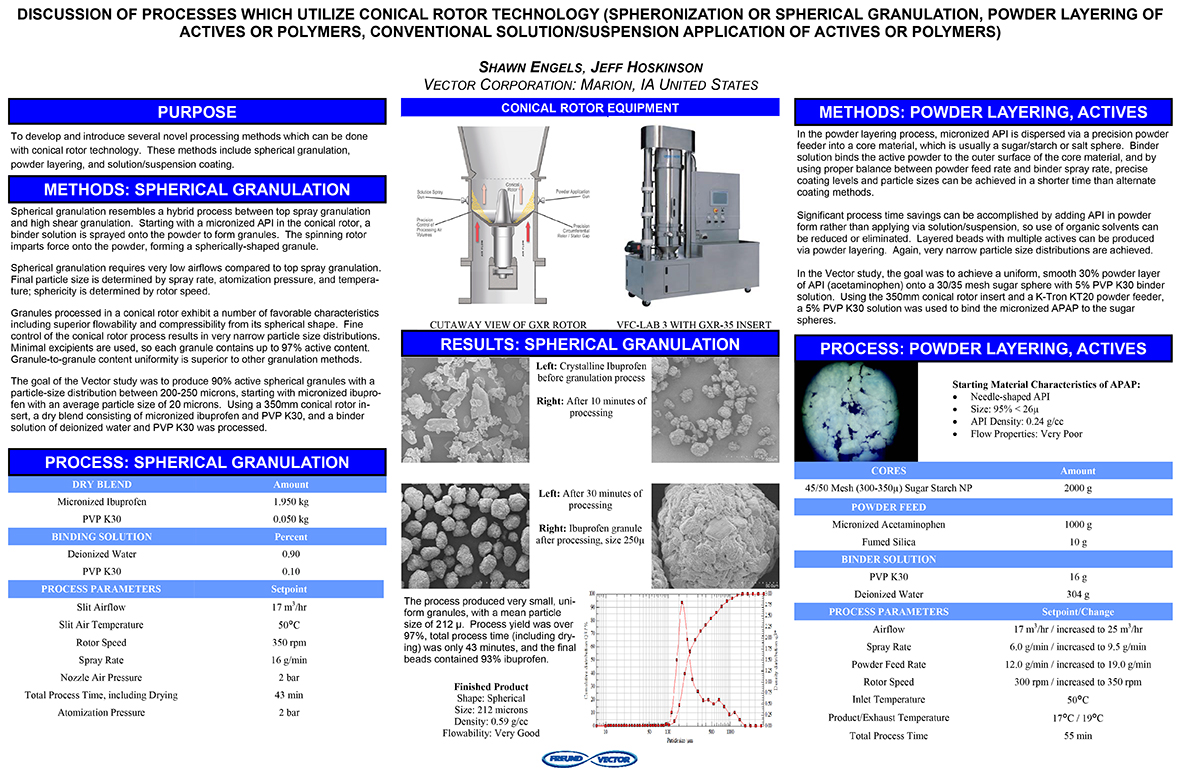
Conventional functional coating systems require the use of aqueous coating dispersion with limitation for highly moisture sensitive actives or solvent systems requiring additional safety measures. As there is no drying for the solvent needed, powder layering processes are quicker and it do not require the use of any solvents and uses only minimal amount of water emulsified with liquid plasticizer as a binder to facilitate film formation.

Continue

Tablet Coating at Low Bed Temperatures with a Novel Coating Polymer

Currently, when coating tablets with moisture sensitive actives, aqueous film coatings based on PEG, PVA, and HPMC are recommended to be applied at high product temperatures to overcome the API’s sensitivity. Unfortunately, this approach can lead to heat degradation of the API and other potential physical tablet coating defects.

Continue

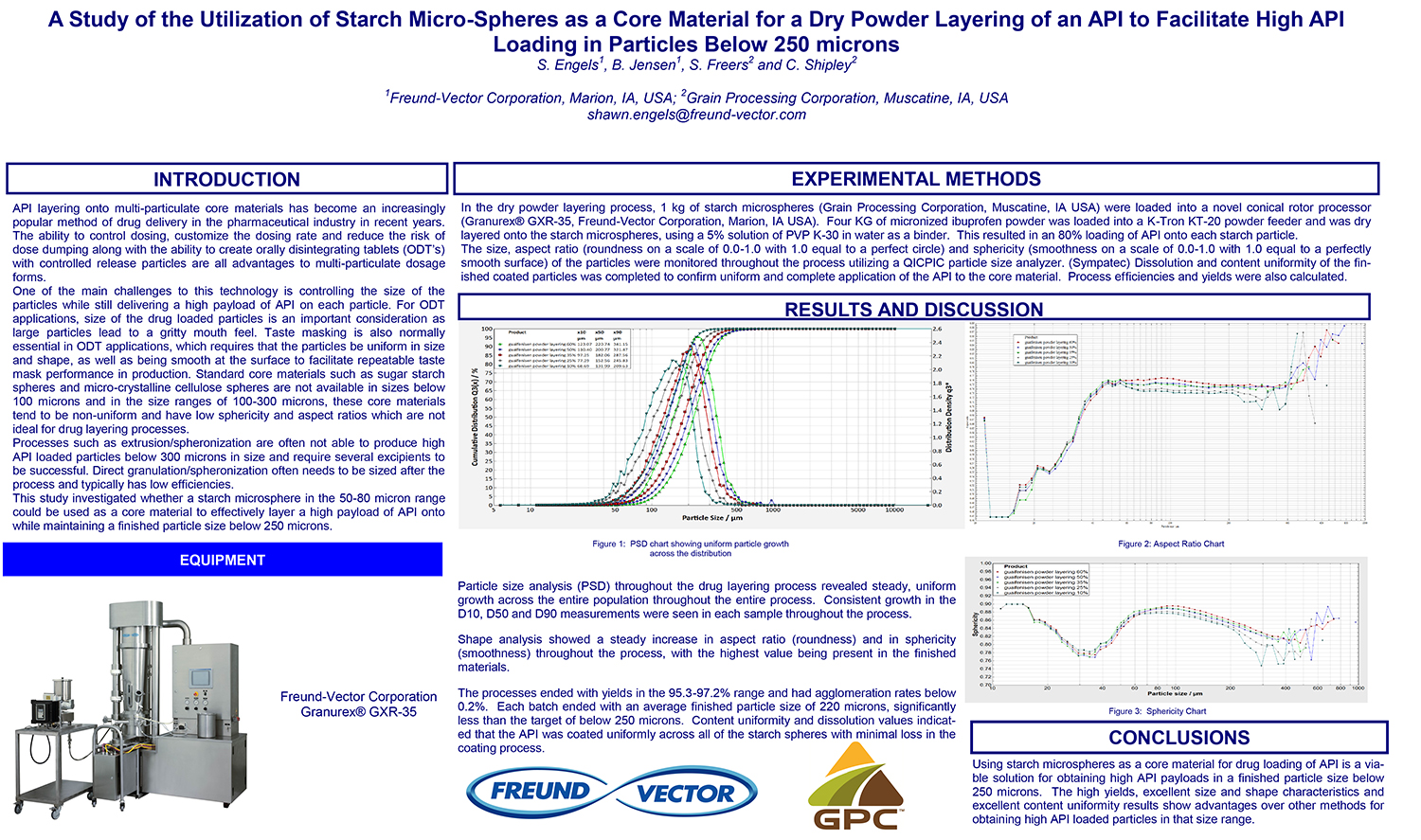
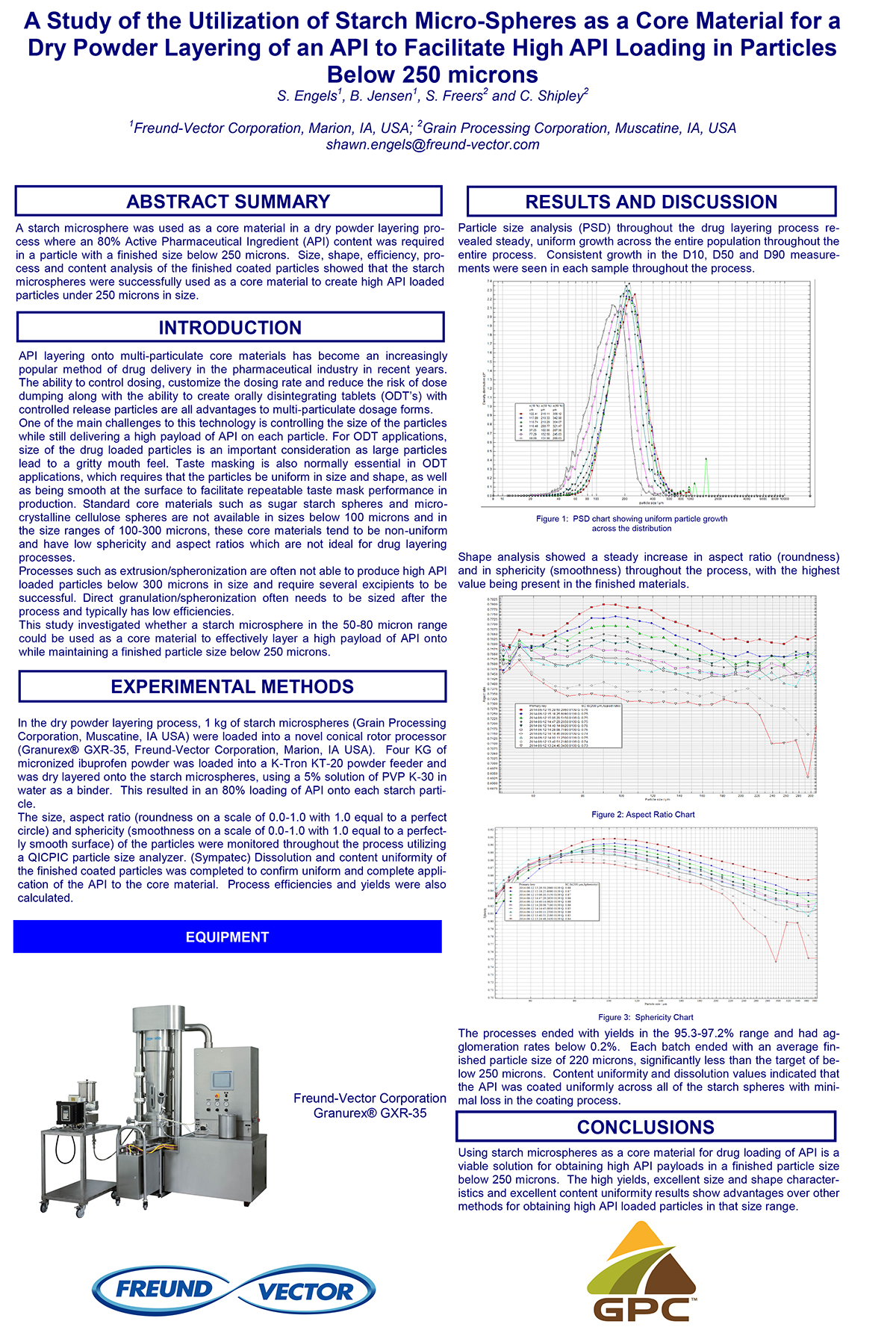
Utilization of Starch Micro-Spheres as a Core Material for Dry Powder Layering of an API to Facilitate High API

API layering onto multi-particulate core materials has become an increasingly popular method of drug delivery in the pharmaceutical industry in recent years. The ability to control dosing, customize the dosing rate and reduce the risk of dose dumping along with the ability to create orally disintegrating tablets (ODT’s) with controlled release particles are all advantages to multi-particulate dosage forms.

Continue

Utilization of Starch Micro-Spheres as a Core Material for Dry Powder Layering of an API to Facilitate High API Loading in Particles Below 250 Microns

A starch microsphere was used as a core material in a dry powder layering process where an 80% Active Pharmaceutical Ingredient (API) content was required in a particle with a finished size below 250 microns. Size, shape, efficiency, process and content analysis of the finished coated particles showed that the starch microspheres were successfully used as a core material to create high API loaded particles under 250 microns in size.

Continue

Controlled Release Coatings of Ethylcellulose on Drug Loaded Multiparticulates Comparison of Rotor Dry Layering with Wurster Bottom Spray Process

Spray coatings of ethylcellulose for controlled release on multi-particulate dosage forms are common in the pharmaceutical industry, but can be disadvantageous because of long process times, need for organic solvent capabilities, and particulate agglomeration. This study highlights the advantages of a rotor dry powder layering process in overcoming these deficiencies by comparing performance, productivity and cost to solvent based Wurster coating and aqueous-based Wurster coating.

Continue

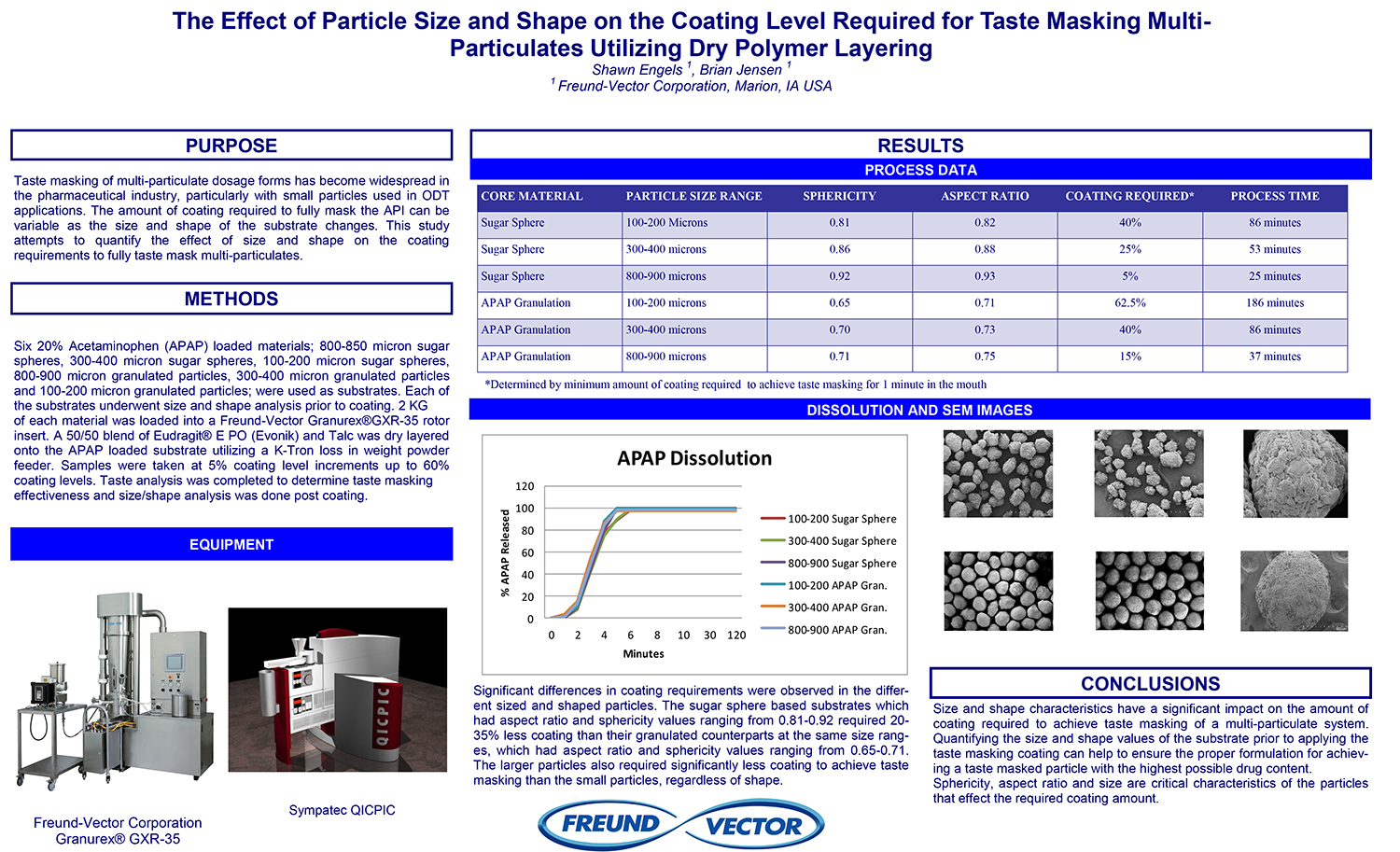
Effect of Particle Size and Shape on the Coating Level Required for Taste Masking Multi-Particulates Utilizing Dry Powder Layering

Taste masking of multi-particulate dosage forms has become widespread in the pharmaceutical industry, particularly with small particles used in ODT applications. The amount of coating required to fully mask the API can be variable as the size and shape of the substrate changes. This study attempts to quantify the effect of size and shape on the coating
requirements to fully taste mask multi-particulates.

Continue

Novel Method for Introducing Dry Powder Directly into the Spray Zone of a Bottom Spray Wurster Coating Process

Wurster coating of multi-particulates with polymer suspensions and solutions is widespread in the pharmaceutical industry. Several formulations for polymer coatings of aqueous dispersions and organic solvent based polymer systems require glidants such as talc to be suspended into the polymer solutions to cut down on polymer tackiness and reduce agglomeration. These glidants can fall out of solution during the process, causing gun plugging, line plugging, extended processing times and inefficient coating. This study focuses on a modification to an existing Wurster spray system to add solid glidants via a powder feeder in dry form during the Wurster coating process.

Continue